The “City of Alabaster”
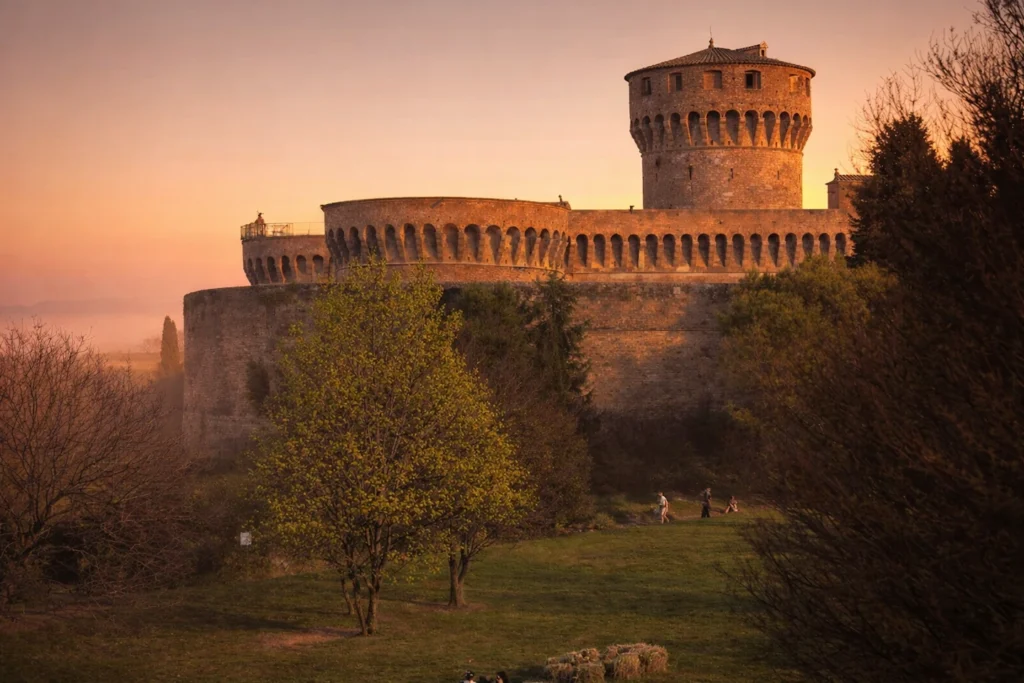
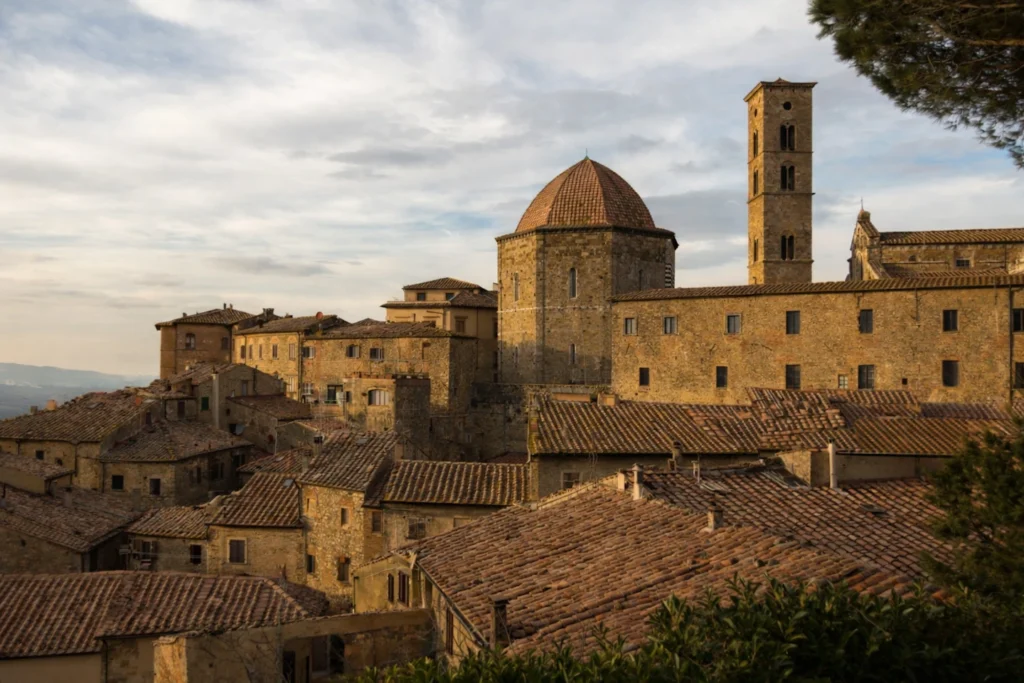
Volterra has a rare kind of presence, a walled hilltop city where Etruscan engineering, Roman urbanism, and medieval power still read clearly in stone. Long before it became a Tuscan destination, it was already an ancient centre, known as Volaterrae, with deep Etruscan roots, and that layered continuity is exactly what makes Volterra feel so compact yet so substantial.
What to see in Volterra
Start with the most direct statement of identity, Porta all’Arco, the Etruscan gate built between the 4th and 3rd centuries BC, still marked by its three mysterious stone heads. It is not just a photogenic monument, it is an intact lesson in early Italian fortification and the architectural intelligence of the Etruscans, surviving in place as a true threshold into the city.
From there, move into Volterra’s civic heart at Piazza dei Priori. The Palazzo dei Priori, begun in 1208, is the oldest municipal building in Tuscany, and it still anchors the town with the severe, vertical confidence of a medieval commune that took autonomy seriously. Its façade, full of later layers and emblems, is part of the point, Volterra’s history is not a single era preserved, but a political biography written on stone.
A few minutes away, Piazza San Giovanni offers a different kind of gravitas. The Cathedral of Santa Maria Assunta was rebuilt after the devastating earthquake of 1117 and consecrated in 1120, then enlarged and reworked in the centuries that followed, holding together Romanesque sobriety and later refinements. The interior remains calm, ordered, and genuinely ecclesial.
To understand why Volterra matters well beyond its skyline, the Guarnacci Etruscan Museum is essential. Founded in 1761 after Mario Guarnacci donated his collection to the city, it is among the earliest public museums in Italy, and its holdings are decisive for anyone who wants to see the Etruscans as a civilisation, not as a decorative footnote. The famous Ombra della Sera, with its startlingly modern silhouette, is the kind of object that stays in memory because it rewires your sense of ancient form.
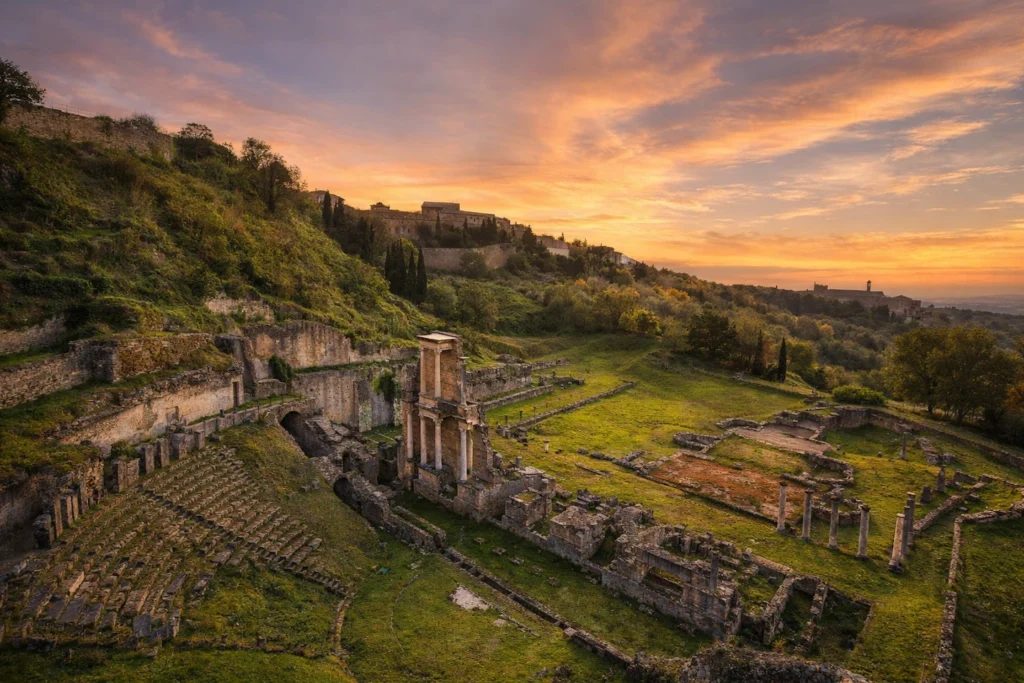
Volterra also has a Roman chapter you can walk into with surprising immediacy. The Roman Theatre, brought to light in the 1950s by Enrico Fiumi, sits just outside the medieval core and remains one of the best-preserved theatres in Italy. It restores scale to the city’s ancient life, reminding you that Volterra was not only fortified, but fully urban, built for spectacle, public gathering, and civic display.
Finally, Volterra’s most distinctive craft deserves a focused stop, alabaster. The Ecomuseum of Alabaster traces extraction, processing, and trade from Etruscan times to the present, framing alabaster not as a souvenir-material but as a civic economy and a long cultural technique, one that shaped the town’s workshops, tastes, and identity across centuries.
Nearby - Saline
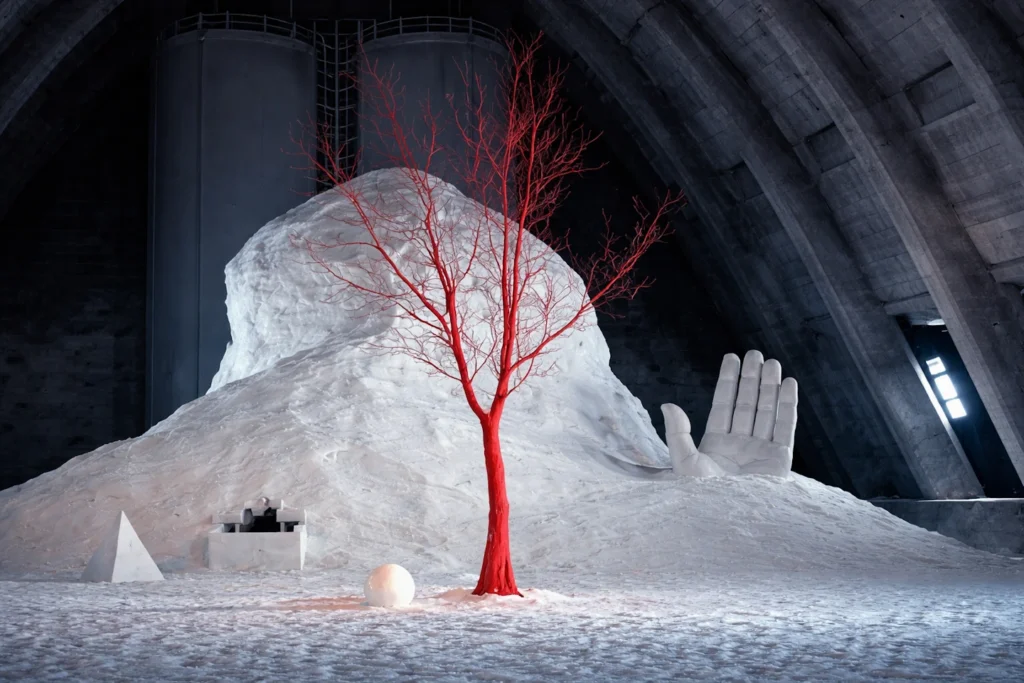
A genuinely curious nearby excursion, still within the Volterra area, is Saline di Volterra, where salt has been extracted for centuries and industrialised decisively from the Grand Duchy period onward. Today, guided visits to the former State Saltworks, now Locatelli, turn an active production site into a working museum. Highlights include the dramatic salt “waterfall” inside a pavilion designed by Pier Luigi Nervi, a dedicated salt museum with exhibits and video material, and the small emporium that completes the visit without turning it into a shop-first experience.