The “Ideal City”
Pienza is not simply a beautiful hilltown in the Val d’Orcia, it is one of the very few places where Renaissance town-planning was executed as a coherent, walkable project. When Enea Silvio Piccolomini became Pope Pius II, he enlisted Bernardo Rossellino to transform his birthplace into a model city, turning humanist ideas about proportion, civic order, and designed beauty into real stone and real streets. The result is compact, legible, and unusually satisfying, you don’t visit Pienza by collecting sights, but by reading a complete urban composition.
What to see in Pienza
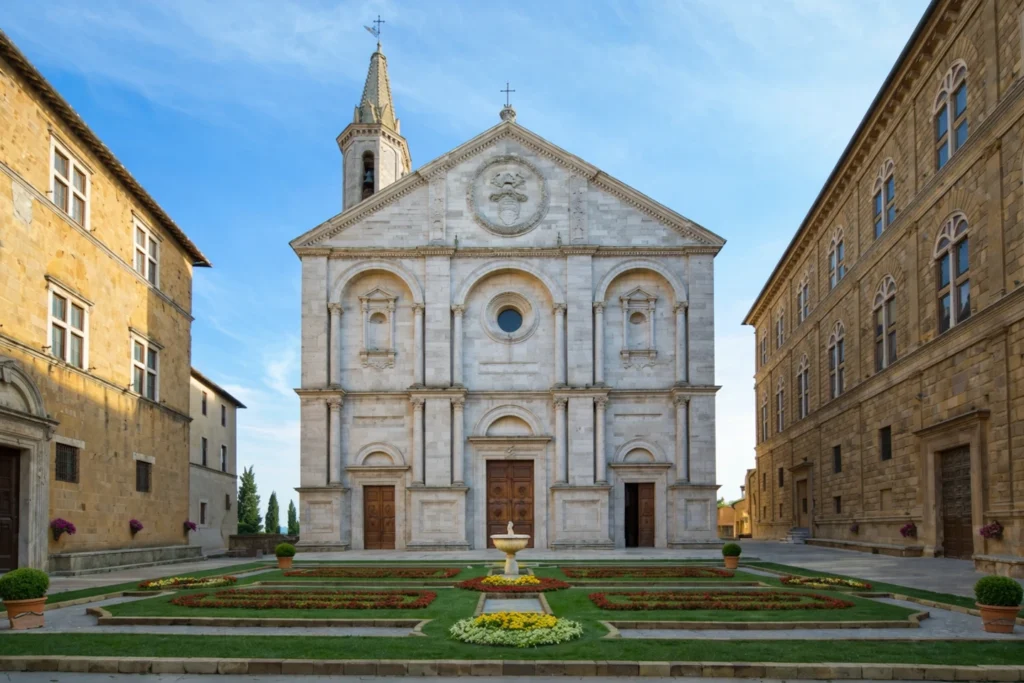
Begin exactly where the project declares itself, Piazza Pio II. The square is not casual, it is an architectural instrument, a controlled space where the powers of a Renaissance city are set in dialogue within a few steps, the Cathedral, the papal palace, the civic buildings. It’s the kind of place where you feel, immediately, that the town was planned as an idea before it was lived as a routine.
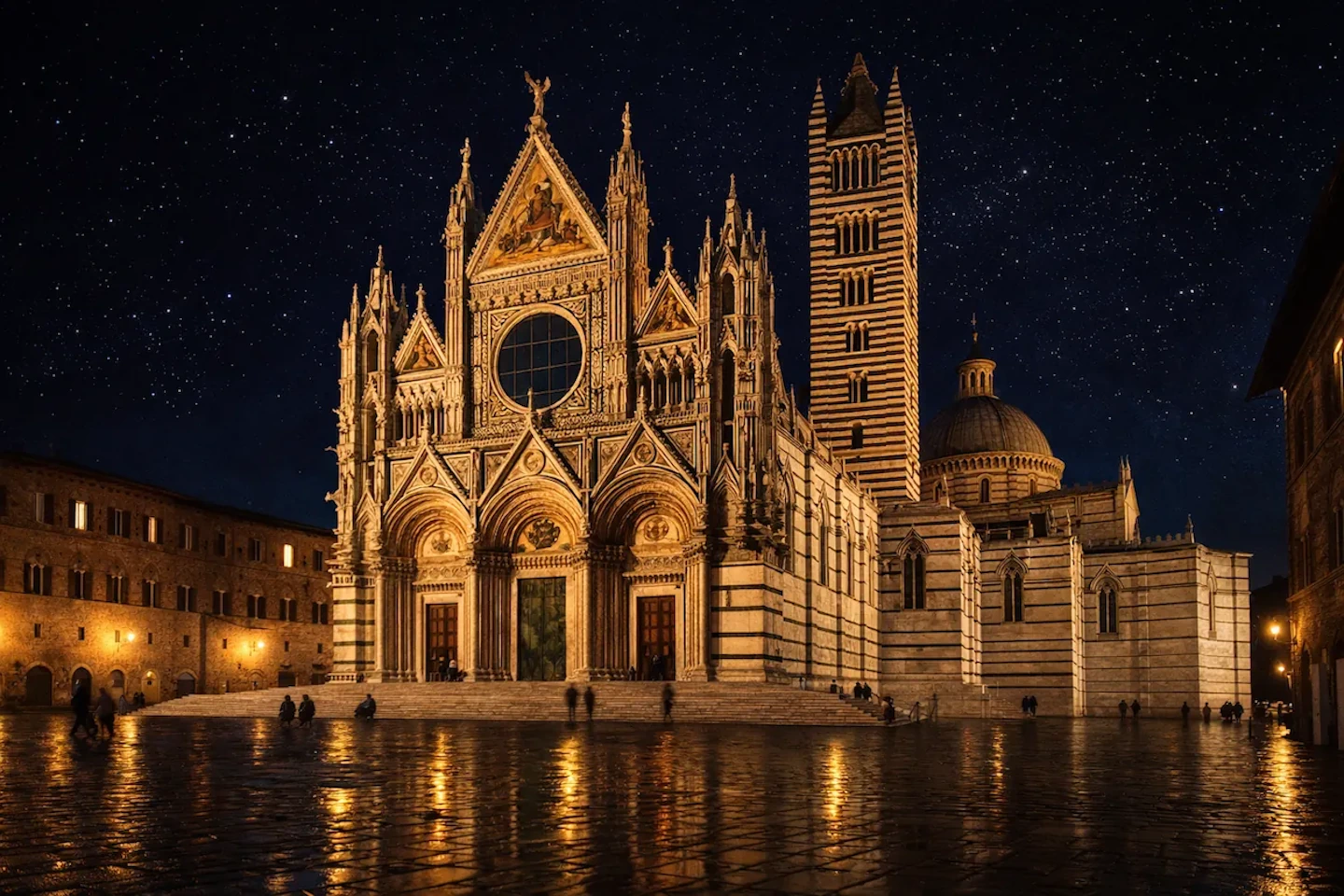
The Cathedral of Santa Maria Assunta anchors the piazza with calm authority. Designed by Rossellino and consecrated in 1462, it is one of those churches that feel both monumental and restrained, a civic-religious centre that matches the measured intelligence of the town rather than trying to overwhelm it.
Right beside it, Palazzo Piccolomini gives the visit its most explicit Renaissance lesson. Commissioned by Pius II and designed by Rossellino after 1459, it is a foundational example of early Renaissance residential architecture, with a loggia that opens the building toward the Val d’Orcia and a hanging garden often cited as a pioneering Renaissance model. It’s the perfect counterpoint to the cathedral, not devotion, but cultivated power, private, political, and aesthetic at once.
To add depth without leaving the town’s logic, step slightly outside the centre to the Pieve di Corsignano. Romanesque in character and traditionally dated to the 12th century, with older roots on the site, it reconnects Pienza to what it was before the Renaissance redesign. The baptismal font linked to Pius II, and his nephew Pius III, is a quiet detail, but it makes the biography of the place feel concrete rather than narrated.
Nearby - Sant’Antimo Abbey
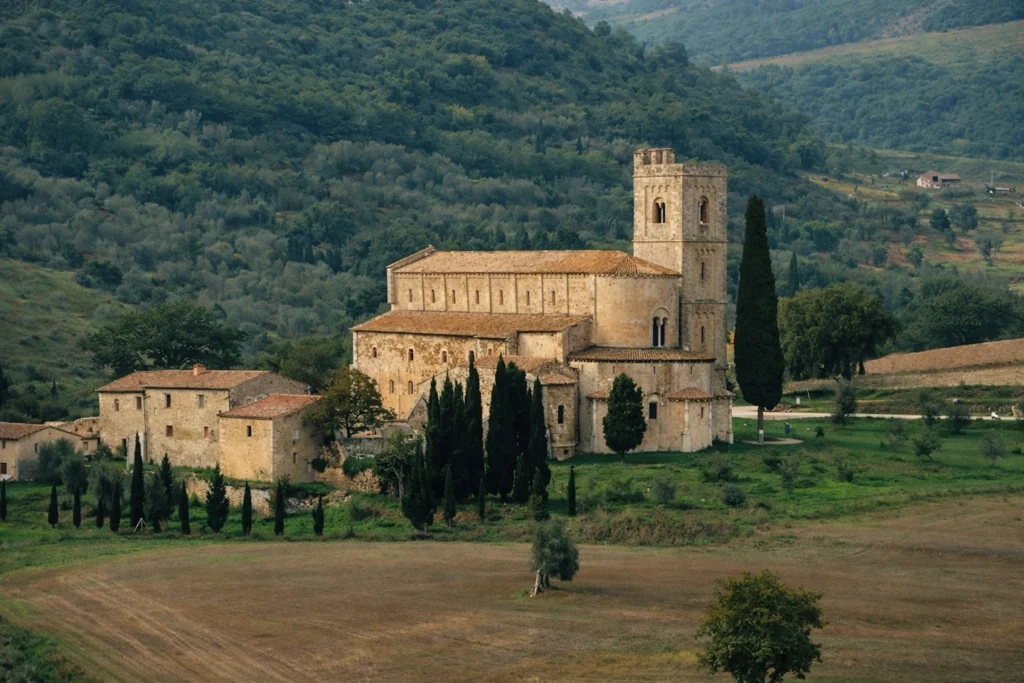
A particularly fitting nearby stop is the Abbey of Sant’Antimo, near Montalcino, set in a quiet valley that makes the approach feel like a deliberate pause after the designed clarity of Pienza. The church you see today is one of southern Tuscany’s most refined Romanesque presences, construction of the current building began before 1118, yet the site preserves visible traces of earlier phases in the crypt and in the so-called Carolingian chapel. It is an excursion that works especially well for guests who like places where beauty is architectural and tactile, stone, proportions, light, silence, and it adds a monastic layer to the Val d’Orcia story without repeating the same hilltown experience.