The “Black Rooster Town”
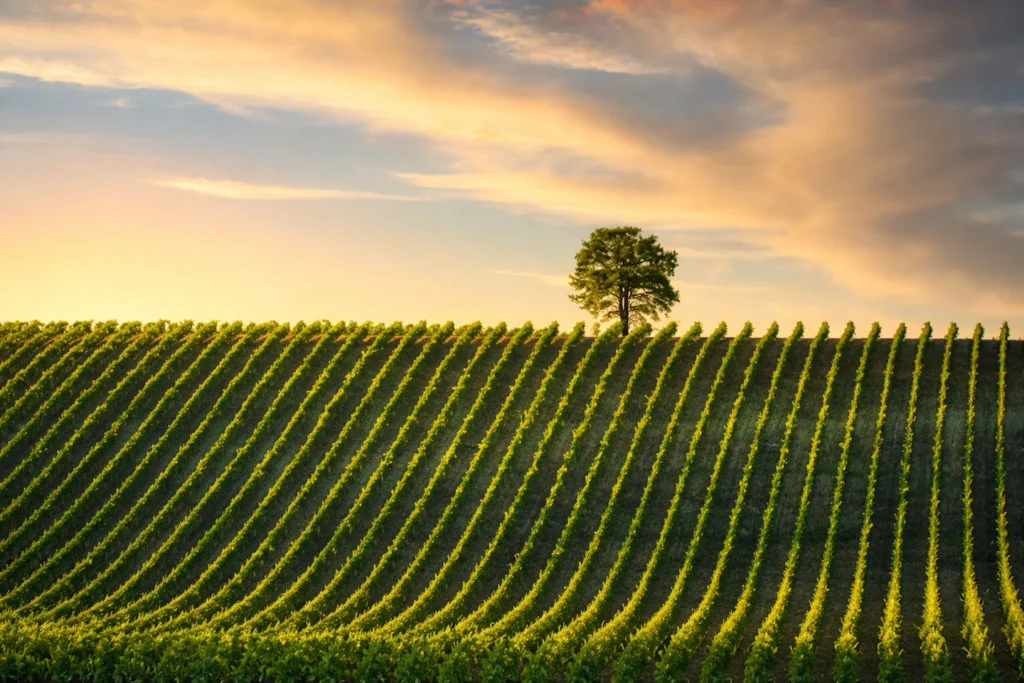
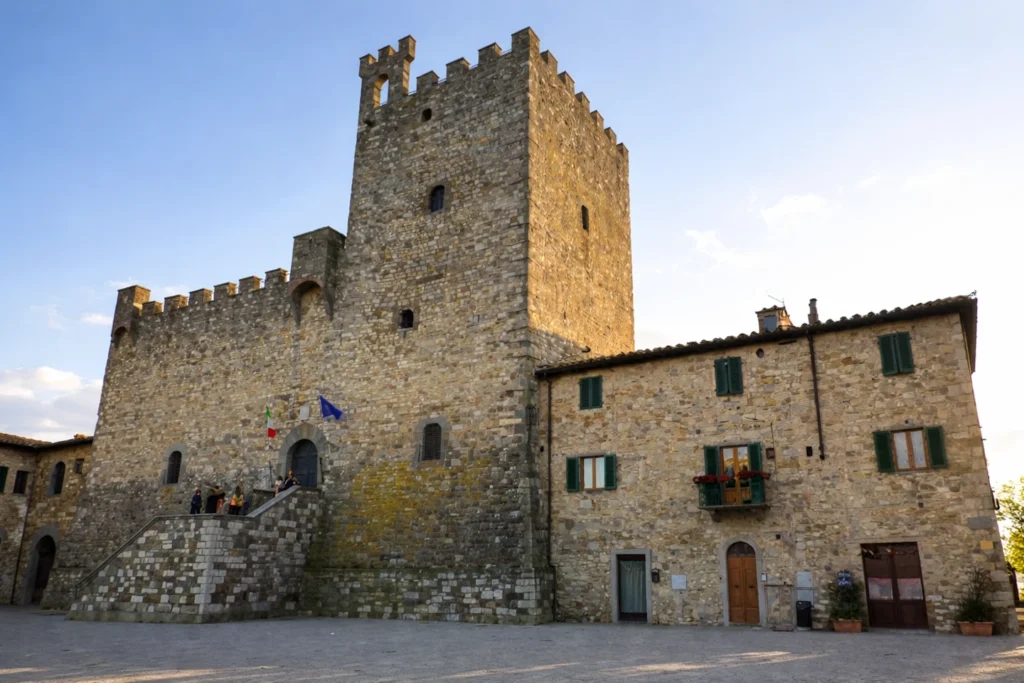
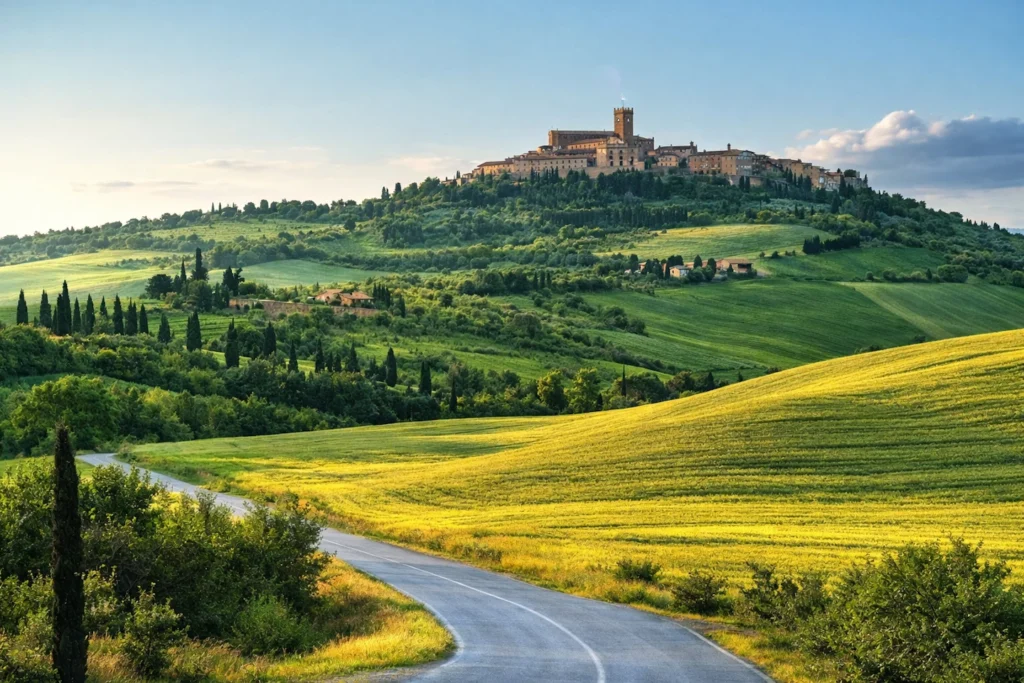
Castellina in Chianti feels like the Chianti Classico idea made legible, a compact hilltop centre set inside the historic “Gallo Nero” production zone, where landscape, fortified history, and wine culture sit on the same line rather than competing for attention. In the Chianti Classico map, Castellina is not a marginal name, it is one of the core municipalities of the denomination, and the town still reads like a small strategic capital for a territory built on routes, borders, and vineyards.
What to see in Castellina in Chianti
Start with the town’s most distinctive urban feature, Via delle Volte, the covered vaulted passage that runs like a protected spine through the historic centre. It is both atmospheric and functional, an architectural solution that turns movement into defence, and local research highlighted by the municipality links the work to Filippo Brunelleschi’s documented presence in Castellina.
From there, the natural anchor is the Rocca and the Museo Archeologico del Chianti. The museum is designed as a clear route through the ancient Chianti, Etruscan power, fortified sites, and the long formation of the landscape, yet it also gives you an unexpectedly wine-intelligent layer, finds connected to elite drinking culture, including Attic wine amphorae from local contexts, and archaeological evidence that points to early viticulture in the territory. Climb the tower for a clean, panoramic reading of why this hill mattered, you are not looking at pretty countryside, but at a controlled, historically contested space that later became the world of vineyards.
A short walk, or very short drive, outside the historic core brings you to the Tumulo di Montecalvario, one of the most concrete Etruscan presences you can still enter in the Chianti. The monument is structured around four funerary chambers oriented to the cardinal points, and the story is as Tuscan as it gets, known since early modern times, later damaged by looting, then re-read through the materials recovered and conserved locally, most famously the remains of an Etruscan chariot now connected to the museum route in town. It is not a big site, but it is a sharp encounter with the princely Etruscan Chianti behind the postcard.
After the historical spine, give the town its most contemporary truth, wine. Castellina is ideal for a focused Chianti Classico tasting without turning the day into a marathon of driving. Enotecas and tasting rooms make it easy to compare styles, villages, exposures, ageing choices, in a single, compact session, and then go back to walking stone lanes rather than chasing appointments.
Nearby - Chianti Sculpure Park
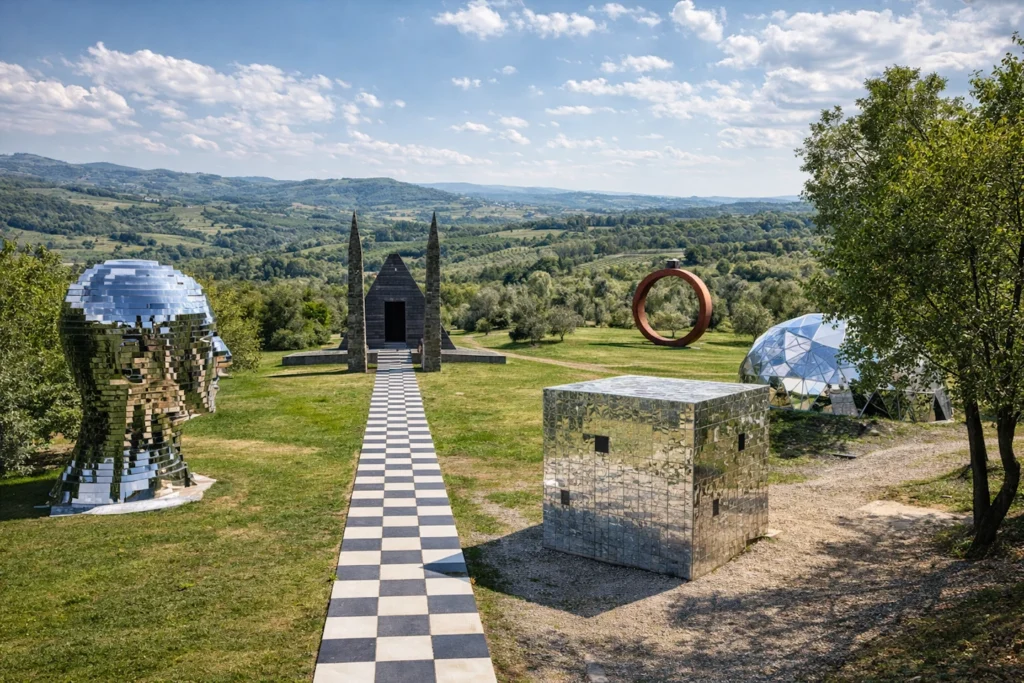
The Chianti Sculpture Park in Pievasciata, Castelnuovo Berardenga, is a permanent open-air collection conceived by Rosalba and Piero Giadrossi. Set within a woodland, it’s designed so contemporary, site-specific works feel integrated into the landscape, created to inhabit the forest rather than simply be placed within it. Since 2004, artists from across five continents have contributed installations and sculptures made specifically for this setting. In summer, the park’s amphitheatre also hosts concerts, turning the visit into a genuinely cultural experience, not just a walk among artworks.