The “Cathedral Hilltown”
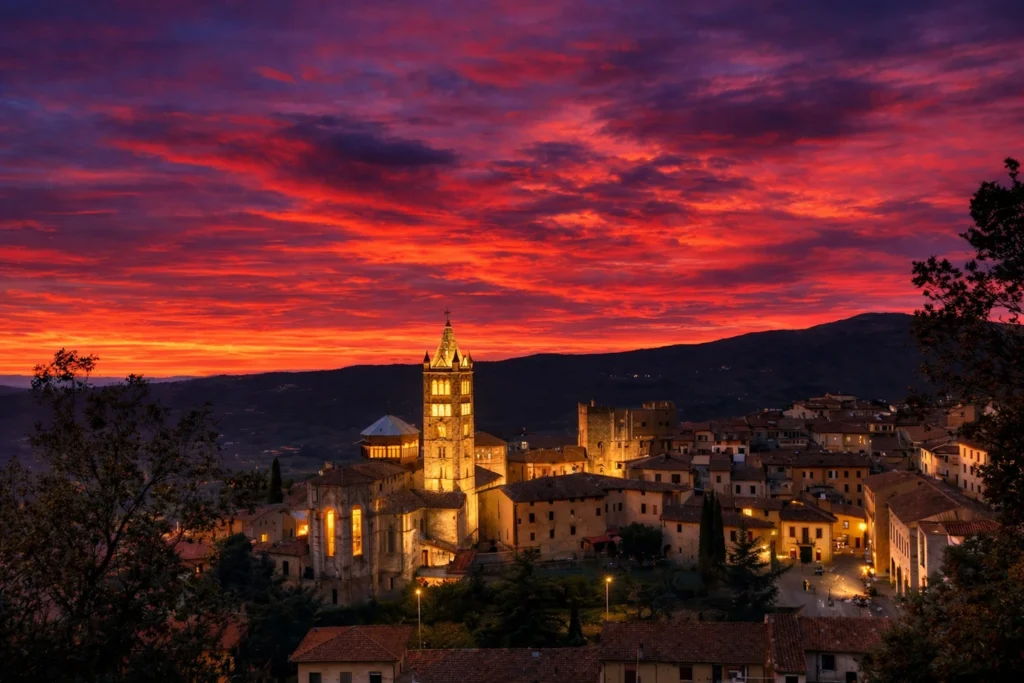
Massa Marittima is a Tuscan hilltown with an unusually monumental centre, shaped by medieval prosperity and by the long economy of the Metalliferous Hills. It does not feel like a “postcard stop”, it feels like a town that once mattered, and still knows it. The scale of its main square, the dignity of its cathedral façade, and the clarity of its civic layout make the visit compact, legible, and deeply rewarding. It is a place where stone, proportion, and history work together without noise.
What to see in Massa Marittima
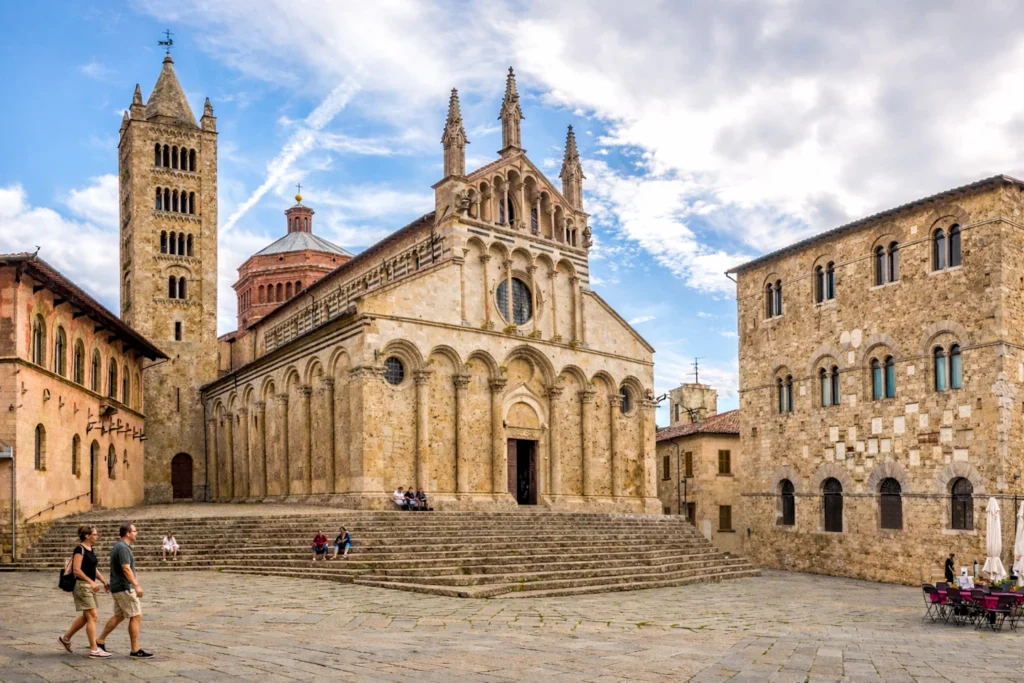
Begin where the town reveals its structure, Piazza Garibaldi. It is one of the most distinctive squares in Tuscany, steep, harmonious, and almost theatrical in the best sense. The cathedral steps create a natural stage, while the surrounding medieval buildings frame the space with a calm, civic gravity. Spend a few minutes simply looking, because this piazza is already an explanation of the town’s identity, power, religion, and public life held in one composition.
The essential interior is the Duomo di San Cerbone. Romanesque in its core, enriched by later Gothic elements, it offers an experience built on proportion, light, and stone rather than spectacle. The feeling is sober but never cold, and it rewards slow attention, to the rhythm of the nave, to sculpted details, and to how the space gathers the visitor into silence. It is the kind of cathedral that still feels like a working civic heart, not a museum container.
Around the same piazza, follow the civic layer that balances the Duomo. The public buildings facing the cathedral create a clear medieval dialogue between religious authority and communal power, visible at street level, without needing a guidebook to decode it. From here, Massa stays walkable and coherent, small lanes, compact climbs, and sudden openings that keep returning you to the square, as if the town were designed to pull your steps back to its centre.
To complete the visit, climb Torre del Candeliere. The ascent is short, and the reward is not only the panorama, it is the way the view makes the town’s history intelligible. From above, you read why Massa sits where it sits, how hilltop defence, routes, and resources shaped its growth, and how the surrounding landscape, woods, ridges, and mineral hills, is not background scenery but the town’s historical engine.
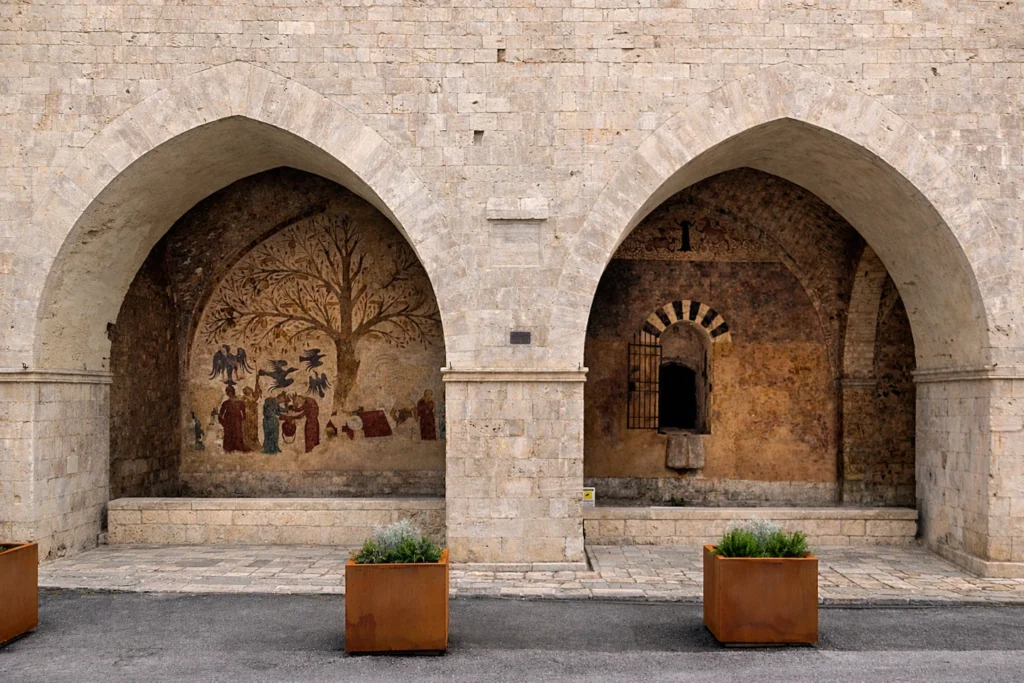
For a distinctly local layer, make space for Fonti dell’Abbondanza and the mining story that underpins the whole territory. The fountain complex adds a quieter, more “everyday medieval” register to the monumental piazza, civic infrastructure, water, and social life. Then, if guests want depth, a focused mining stop brings the town’s past into material reality, tools, labour, and geology, turning beauty into a fuller sense of place and meaning.
Nearby - San Galgano Abbey
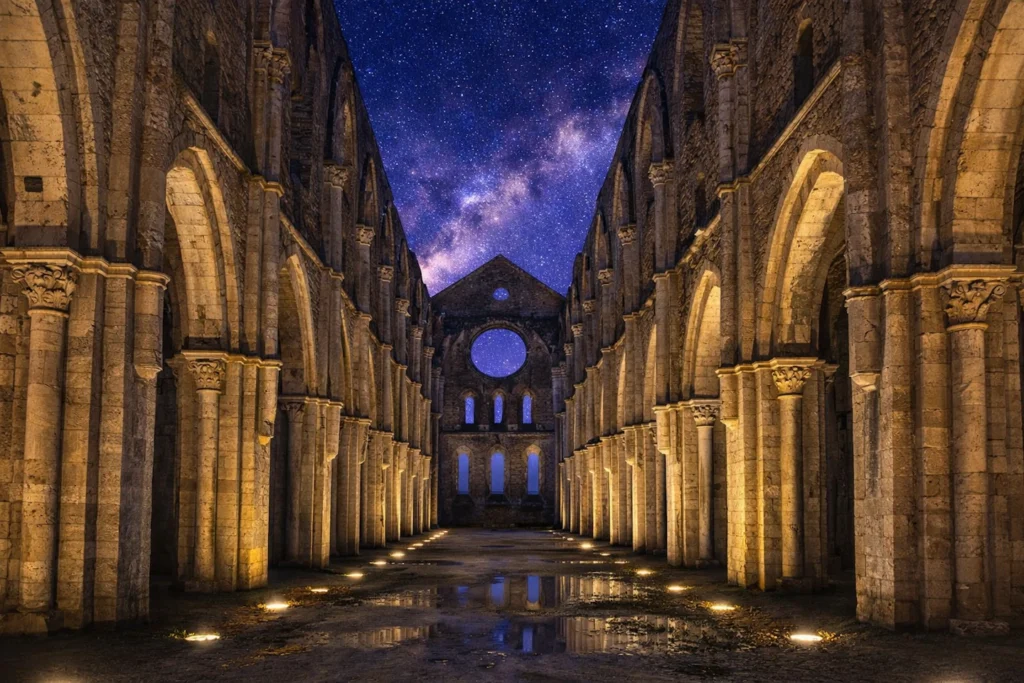
If you want a nearby excursion that feels unforgettable and does not repeat the hilltown format, San Galgano is the right choice. The roofless abbey is one of Tuscany’s most powerful ruins, a Cistercian space open to sky, where architecture becomes light, weather, and silence. Nearby, the small Hermitage of Montesiepi adds a second, more intimate register, a circular sanctuary and the famous “sword in the stone” tradition that gives the visit a layered narrative. It works beautifully as a half day, contemplative, photogenic, and genuinely different.