The “City of Porticoes”

Bologna is instantly recognisable for its porticoes, kilometres of covered walkways that turn the city into a continuous architectural experience of shadow, rhythm, and civic elegance. In 2021, the Porticoes of Bologna were inscribed as a UNESCO World Heritage Site, recognising them not as decoration, but as an urban invention that shapes how the city is lived and perceived. Even though Bologna is not in Tuscany, it is a remarkably easy art and culture day trip from Villa Vianci: many guests drive to Florence, park near Santa Maria Novella station (there is a dedicated “Parcheggio Stazione”), then take a high speed train straight to Bologna Centrale. The result is a city day that feels genuinely urban, learned, and alive, with museums, libraries, music, and an atmosphere that rewards curiosity.
What to see in Bologna
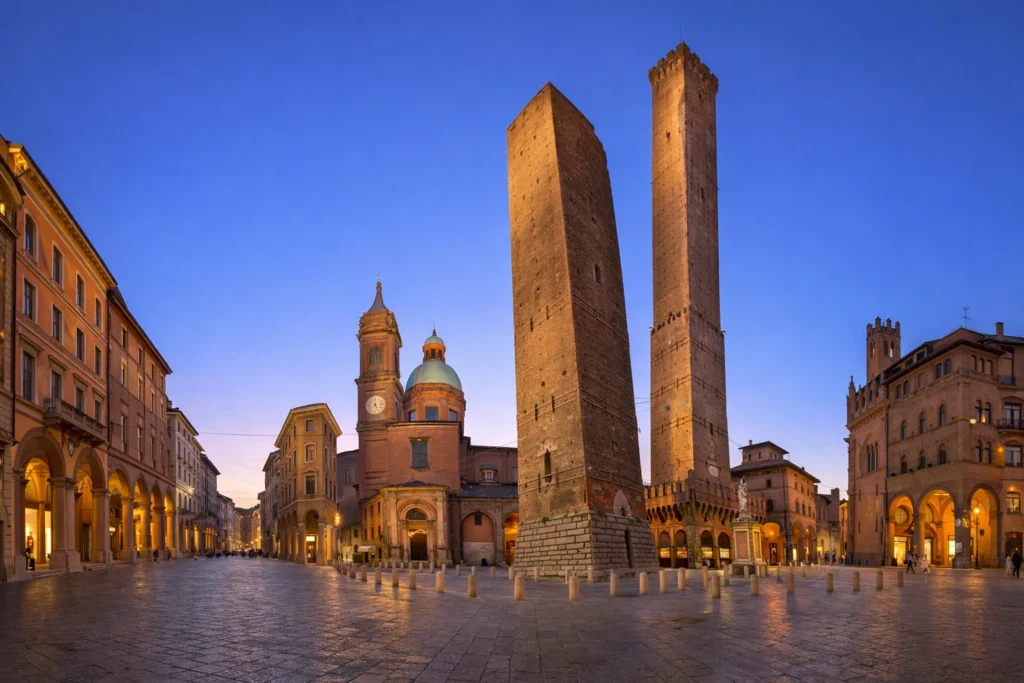
Begin with the city’s civic heart, Piazza Maggiore, because Bologna reveals its cultural temperament through public space. The square is framed by some of Italy’s most instructive civic architectures, not theatrical palaces built to impress, but buildings designed for government, law, and collective life. Step into the Basilica di San Petronio, monumental in scale yet still deeply tied to the square’s civic identity, and notice how Bologna’s character is expressed through material clarity, brick, stone, and a strong sense of proportion. Nearby, the Fontana del Nettuno anchors the space with Renaissance confidence, a symbol that feels less like a postcard and more like Bologna’s old language of power made visible.
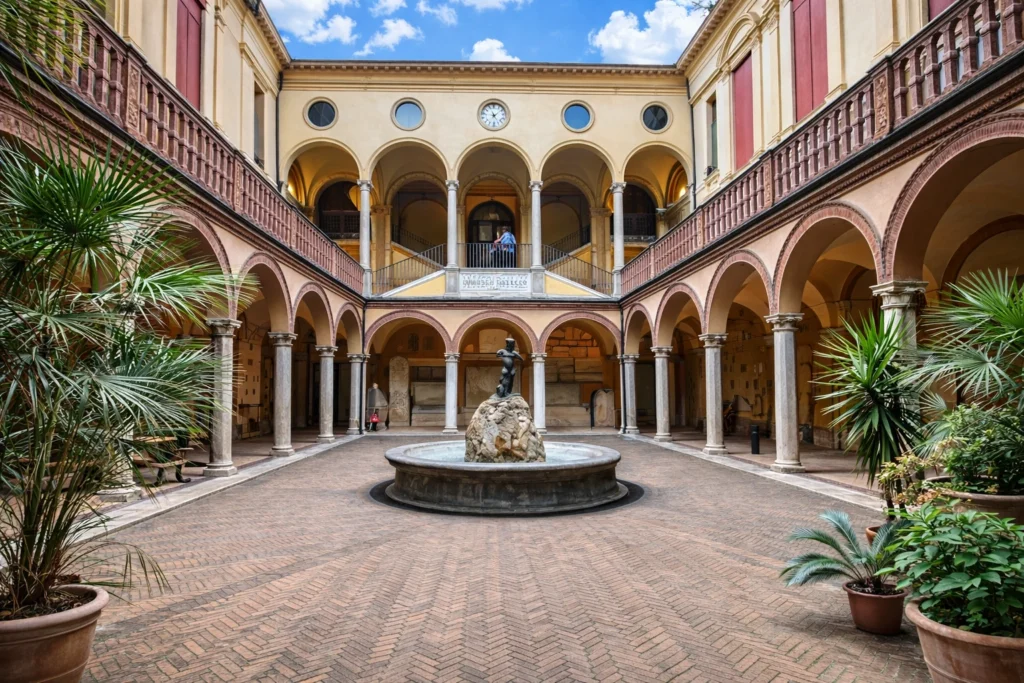
From the piazza, move to one of the most distinctive “Bologna only” experiences, the Archiginnasio. This was the historic seat of the University, and it still feels like a machine for learning rather than a neutral monument. Give time to the Anatomical Theatre, because it condenses Bologna’s identity as a European capital of study into one room, wood, iconography, and the quiet seriousness of scientific culture. Pair it with a stop at Biblioteca Salaborsa, a contemporary civic library that also lets you see archaeological layers beneath your feet, a simple but memorable way to understand Bologna as a stratified city, still using knowledge as a public good.
If your aim is explicitly art, make room for the Pinacoteca Nazionale. It is the cleanest way to read Bologna’s painting tradition with continuity, from the Middle Ages through the Renaissance and into the Baroque, and it clarifies why the city’s visual culture is not secondary to Florence’s, but different in temperament and often astonishing in quality. Then balance “museum Bologna” with “walking Bologna” through the Quadrilatero area, not as a food detour, but as a living piece of urban anthropology, small streets, craft logic, and the everyday rituals of a city that has never stopped being inhabited.
To complete the day with a sense of Bologna as a vertical and panoramic organism, consider the Towers. The climb up Torre degli Asinelli is a physical effort, but it repays you with the most legible city view: rooftops, porticoes, long streets, and the geography of a historic centre built for pedestrians. If you want a cultural stop that feels modern without becoming generic, add MAMbo, Bologna’s contemporary art museum, which often provides a good counterpoint to the city’s medieval and Renaissance density.
Finally, give Bologna at least one experience tied to performance and sound. Depending on the calendar, an evening concert, opera, or a well chosen recital can be the most “Bologna” ending possible, because this is a city where culture is not a museum posture but a daily layer. The key is pacing: Bologna rewards guests who keep the itinerary compact and walkable, allowing time for libraries, courtyards, and those long porticoed passages that make the city feel like an open air architectural text.
Nearby - Grand Tour Italia
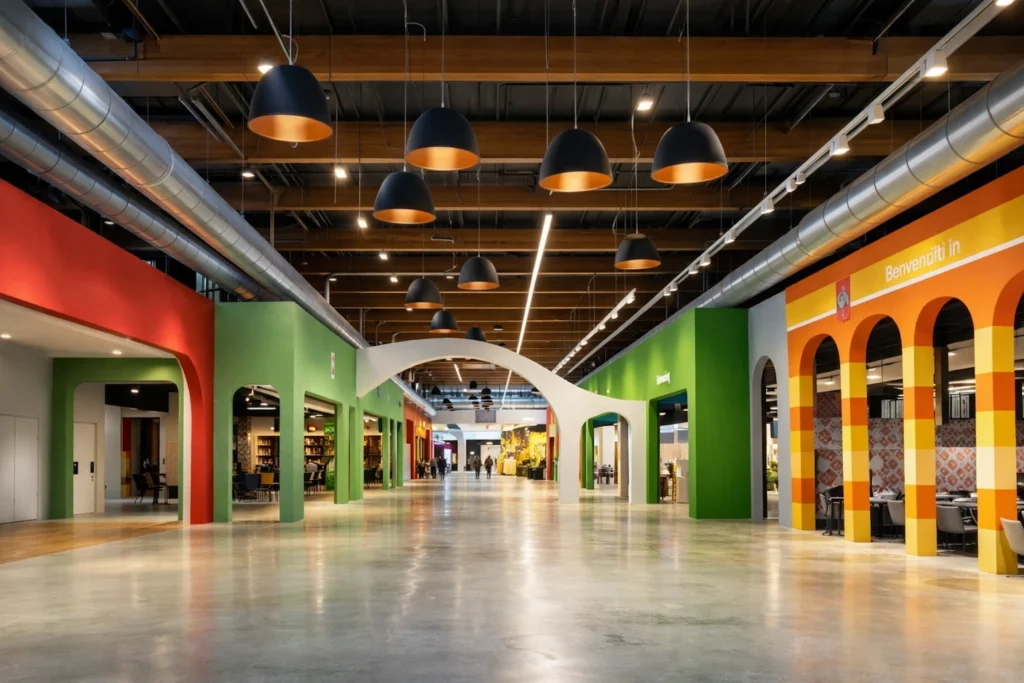
If you want a “nearby” that makes sense without a car and stays aligned with contemporary Italian culture, Grand Tour Italia is an excellent choice. Conceived as an agri food park, it offers a curated route through regional Italian food cultures, products, and themed spaces that work well as a structured, low stress visit.
It is also a practical option if you are arriving in Bologna by train: there is a direct public transport connection from Bologna Centrale, so you can add something outside the historic centre without needing a taxi or a car. Done well, it adds one contemporary layer to a day otherwise focused on porticoes, museums, and historic streets, and it is especially suited to guests who want an “extra stop” that is easy to manage logistically.