The “Romanesque Jewel”
Pistoia is one of Tuscany’s most quietly rewarding art cities, compact, walkable, and unusually coherent. Here, Romanesque architecture is not a single highlight but a whole urban language: striped stone, measured façades, intimate piazzas, and a centre where churches, civic buildings, and everyday streets still fit together with rare clarity. For guests based at Villa Vianci, Pistoia works beautifully as a day trip because it delivers high-quality culture without the crowds and “big-city” pressure, and it rewards a slower pace: look closely, climb a little, stop often, and let the city’s craftsmanship accumulate.
What to see in Pistoia
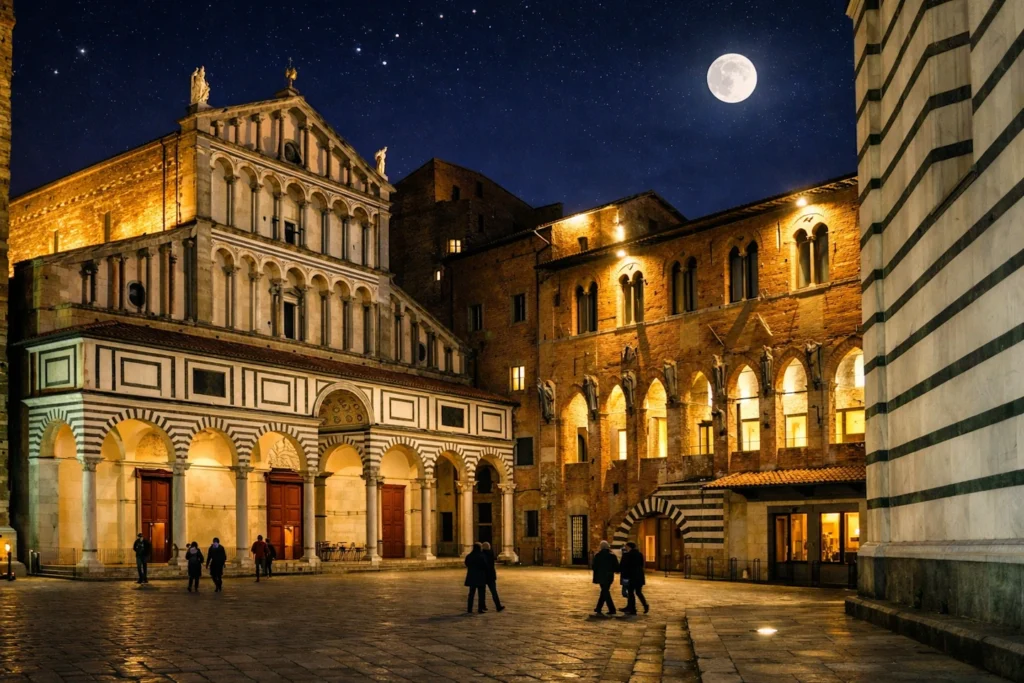
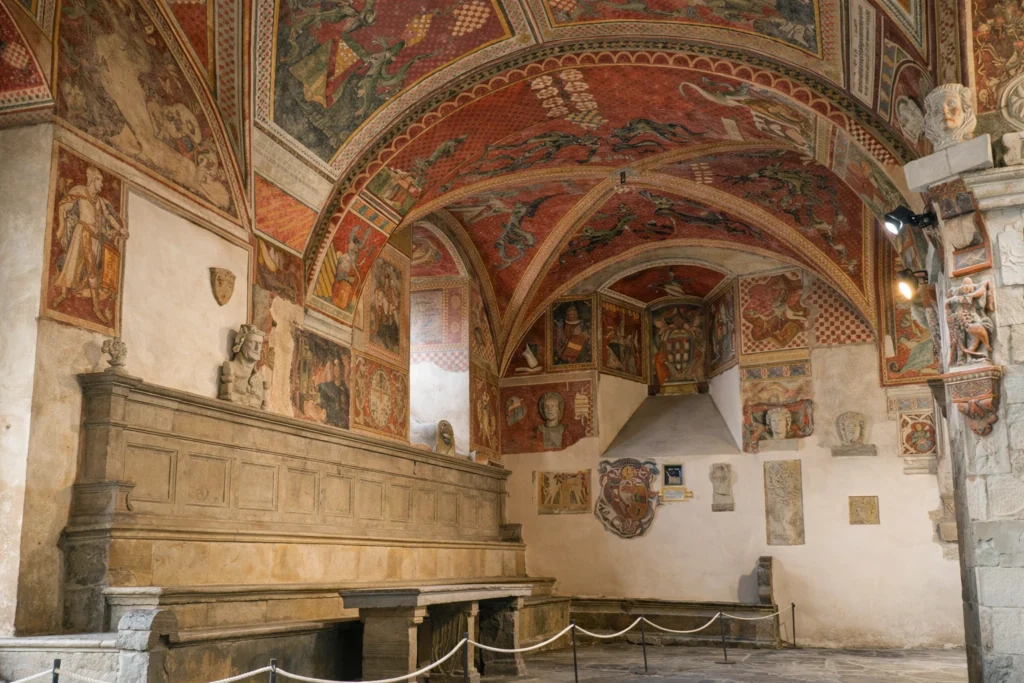
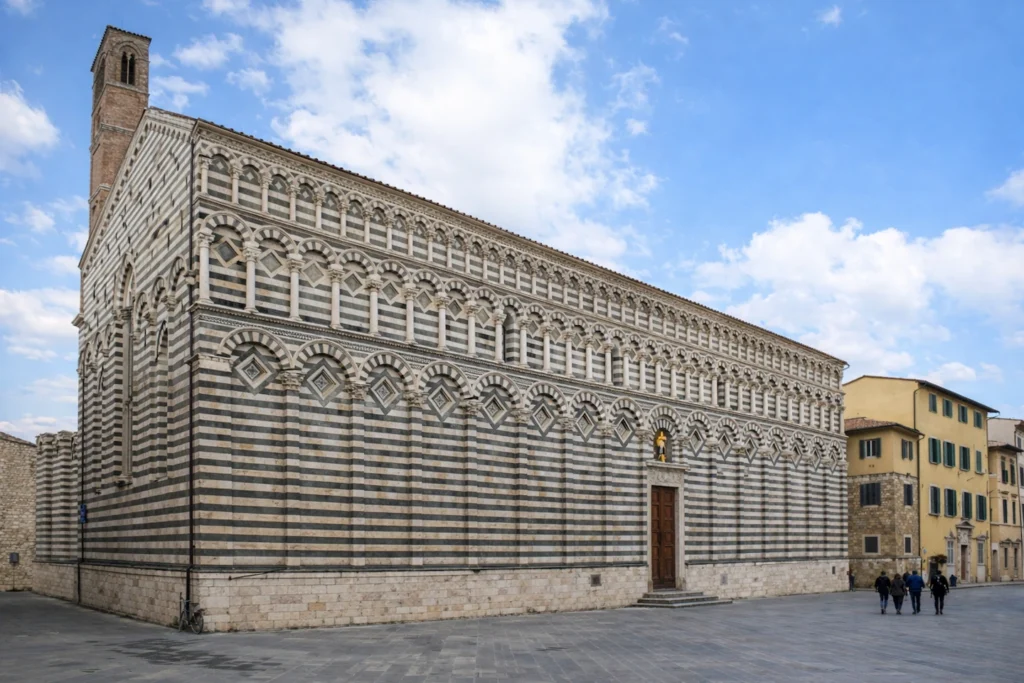
Begin in Piazza del Duomo, because Pistoia explains itself here in one concentrated civic stage. The square feels authentic rather than monumental, and that is exactly its strength: it is a place where the medieval city still reads as a functional organism. Step into the Cathedral of San Zeno, and give real time to the city’s most distinctive treasure, the Silver Altar of Saint James (Altare Argenteo di San Jacopo), a long, complex work created across centuries that reflects Pistoia’s deep identity as a pilgrimage city and a proud commune with an international devotional horizon. Stay in the same piazza to meet one of the best architectural counterpoints in town, the Baptistery of San Giovanni in Corte. Its clear geometry and marble presence make it feel both severe and elegant, and it deepens the sense that Pistoia’s beauty is built on proportion and precision rather than spectacle. From the cathedral complex, move toward a different, more social form of culture: Ospedale del Ceppo. Even if you do nothing else here, do not skip the external loggia and its celebrated glazed-terracotta frieze depicting the Works of Mercy. It is one of those works that turns civic care into visual art, and it connects architecture, charity, and public identity in a way that feels strikingly modern. Now give Pistoia one Romanesque church that feels unmistakably local: San Giovanni Fuorcivitas. The façade’s striped marble and the sculptural richness make it a perfect “slow-looking” stop, and it is also the kind of place where Pistoia’s artistic intelligence feels embedded in stone, not separated into museum rooms. To complete the day with a civic and museum layer, add the Palazzo Comunale area and a focused museum visit, choosing based on your mood: either a concise route that frames Pistoia’s medieval and Renaissance culture in context, or a lighter, street-led finish where the city’s details become the real collection. Pistoia is at its best when you end with unplanned walking: small lanes, quiet corners, and the sense of an art city still lived at a human scale.
Nearby - Prato
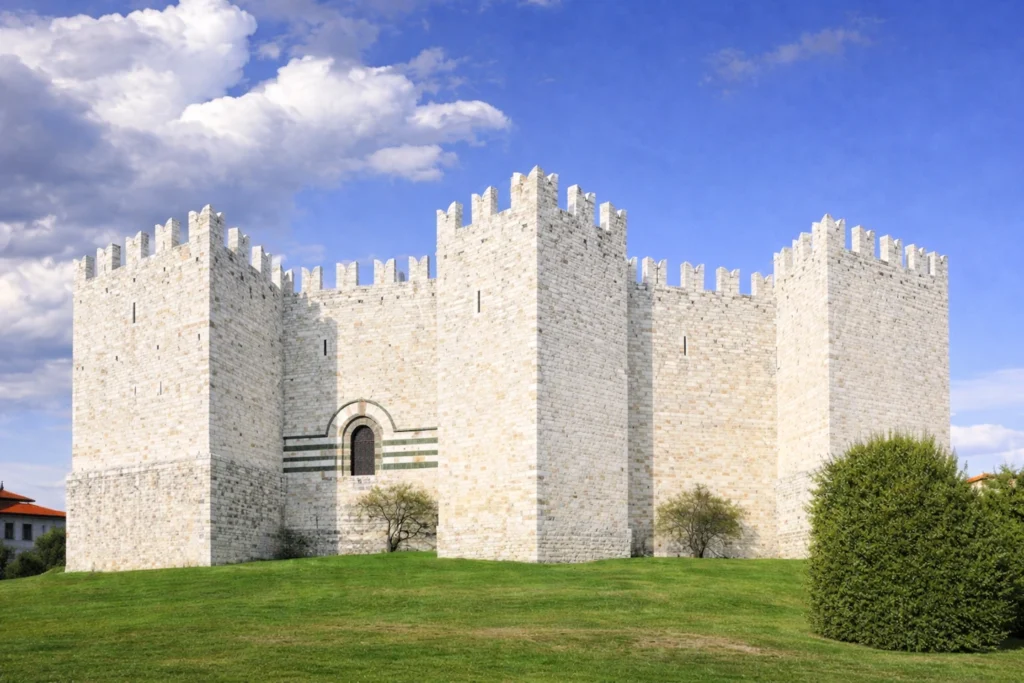
If you want a nearby extension that stays firmly cultural, Prato is an excellent companion to Pistoia. Start with the Castello dell’Imperatore, the city’s bold, Frederician statement and one of the clearest “power architectures” in this part of Tuscany. Then move to Piazza del Duomo for a concentrated Renaissance core: the Cathedral of Santo Stefano holds major works, including the celebrated fresco cycle by Filippo Lippi in the main chapel, and the city’s devotional identity tied to the Sacra Cintola tradition. If you want Prato’s modern soul as well as its historic one, add one museum according to taste: Museo del Tessuto for the city’s textile culture and material intelligence, or Centro Pecci for contemporary art in a setting that feels genuinely urban rather than touristic.