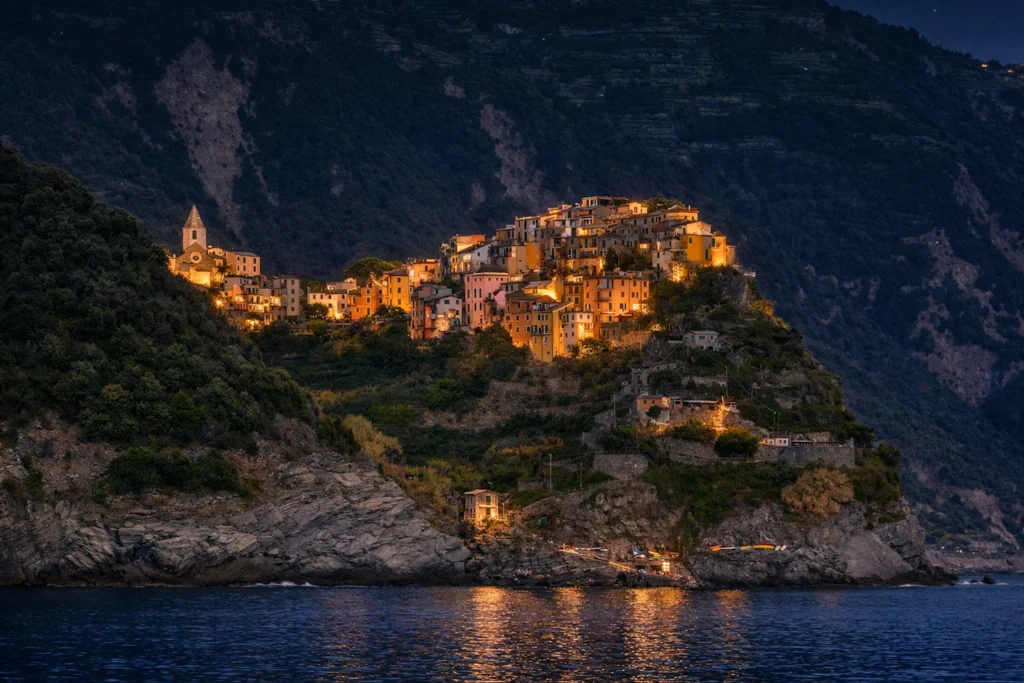
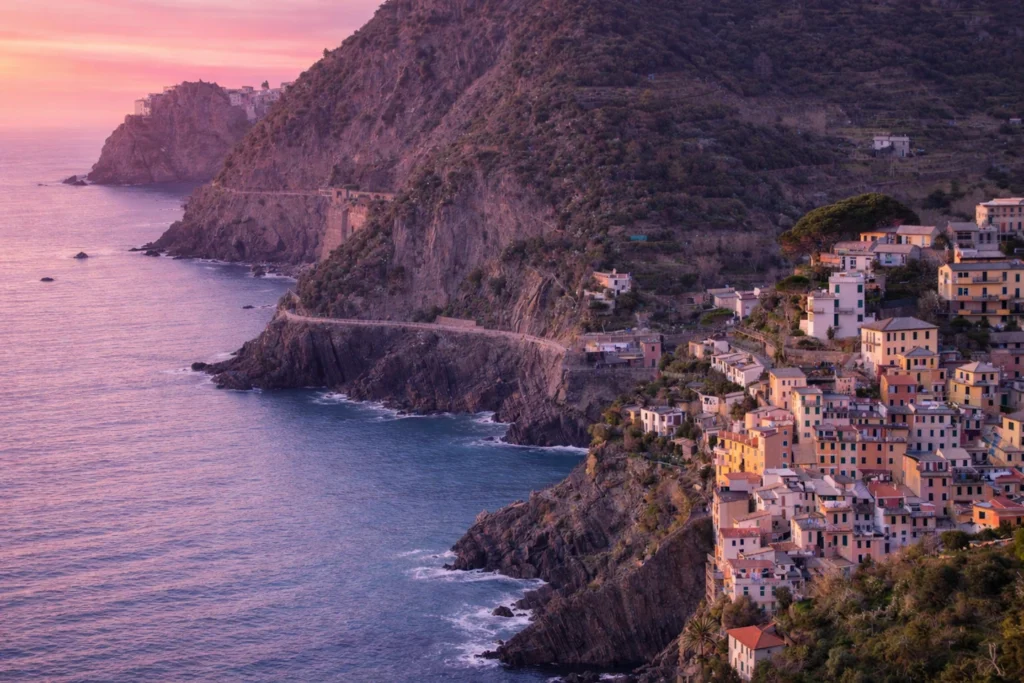
Cinque Terre is the Ligurian coast in its most dramatic form: five villages built between cliff and sea, stitched together by terraces, stone paths, and a marine horizon that keeps changing as you move. It is a UNESCO site and a National Park landscape where the “beauty” is not only in the postcard views, but in the human geometry of vineyards on steep slopes and the sense of a place that had to be engineered, step by step, to be lived.
It is far from Villa Vianci, which changes the day’s strategy. Many guests choose a private driver with a van for the whole day to keep the long transfer comfortable and avoid the stress of parking. Once you are there, the simplest way to move is almost always train, with boat as the scenic alternative when weather and season allow.
At a glance
- Drive time from Villa Vianci: 141 min (to the La Spezia hub, then local transport)
- Best for: hikers and scenery lovers, families with outdoors-focused kids, sea-day guests who still want a cultural landscape
- Time needed: full day (early start strongly recommended)
- Booking tip:plan the long transfer first, then book any timed entries (especially Via dell’Amore) and keep the rest flexible
- Highlight: classic sea-view paths, a “one-way” hiking narrative, and the option to return by train or boat without backtracking
What to see in Cinque Terre
Start with a simple idea: Cinque Terre is not a single walk, it is a chain of viewpoints. The most satisfying day is usually a curated selection of two or three villages, plus one “signature experience”, rather than trying to tick all five in a rush.
Make that signature experience Via dell’Amore, the legendary coastal path linking Riomaggiore to Manarola. It is short, intensely scenic, and emotionally “right” as an opening move because it gives you the Cinque Terre feeling immediately: sea below, rock above, and that sense of moving between places by foot rather than by road. Access is regulated with timed slots and specific rules, so treat it as a bookable experience, not as a casual stroll you can always improvise.
After that, choose your “movement style” based on what your group wants to feel.
If you want the most efficient village-hopping, switch to the train. It keeps the day clean and legible, and it is especially useful for Corniglia, the one village that does not sit directly on the harbour. Corniglia is perched higher, and the train approach is often the smoothest way to include it without wasting time on road logistics.
If, instead, you want the day to feel like coastline travel rather than rail travel, use the boat as your main transition, at least for one leg. This is the best way to reach Vernazza with maximum impact: arriving from the water makes the village read like a small amphitheatre of colour and stone, one of the most iconic visual moments in the whole area. Ferry services are seasonal and weather-dependent, but when they run, they can be the most memorable way to stitch the villages together.
For many guests, Vernazza is also the village that most naturally matches the popular imagination of Pixar’s Luca: the film is set in a fictional Ligurian seaside town and its visual research draws heavily on places like the Cinque Terre and nearby Riviera villages, which is why the colour palette and harbour geometry feel instantly familiar on site.
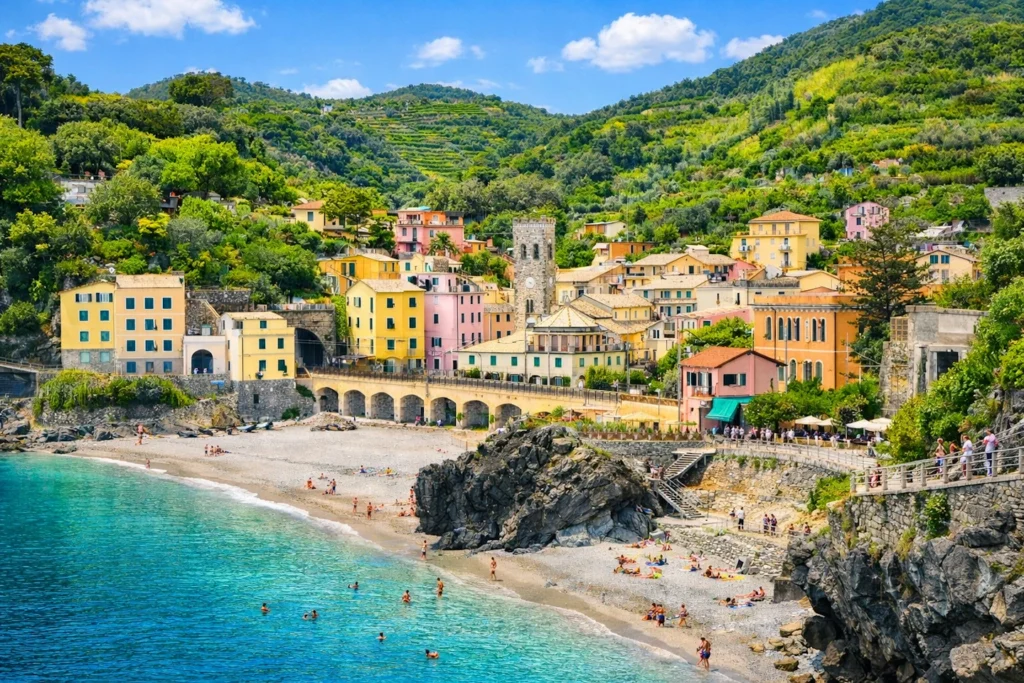
Finally, if someone in the group has a non-negotiable desire to swim, make Monterosso al Mare your beach chapter. Among the five villages, Monterosso is the most straightforward for a proper seaside break, with the widest, most “beach-ready” shore. A practical rhythm is: boat or train to Vernazza for the iconic harbour feel, then train onward to Monterosso for a swim and a slower, sunlit finish.
If you want one more layer beyond villages, keep it light but meaningful: borrow a short segment of the official path network (rather than attempting a full hiking day), and always check the current trail conditions close to your stay because closures and variations do happen along the coast.
Nearby – Portovenere
If you want one detour that completes the Cinque Terre day with a broader “Gulf” perspective, choose Portovenere, just beyond La Spezia. It belongs to the same UNESCO cultural landscape as the Cinque Terre, together with the islands of Palmaria, Tino and Tinetto, which helps explain why it feels so coherent: a steep coast where architecture, defence, and maritime geography are inseparable.
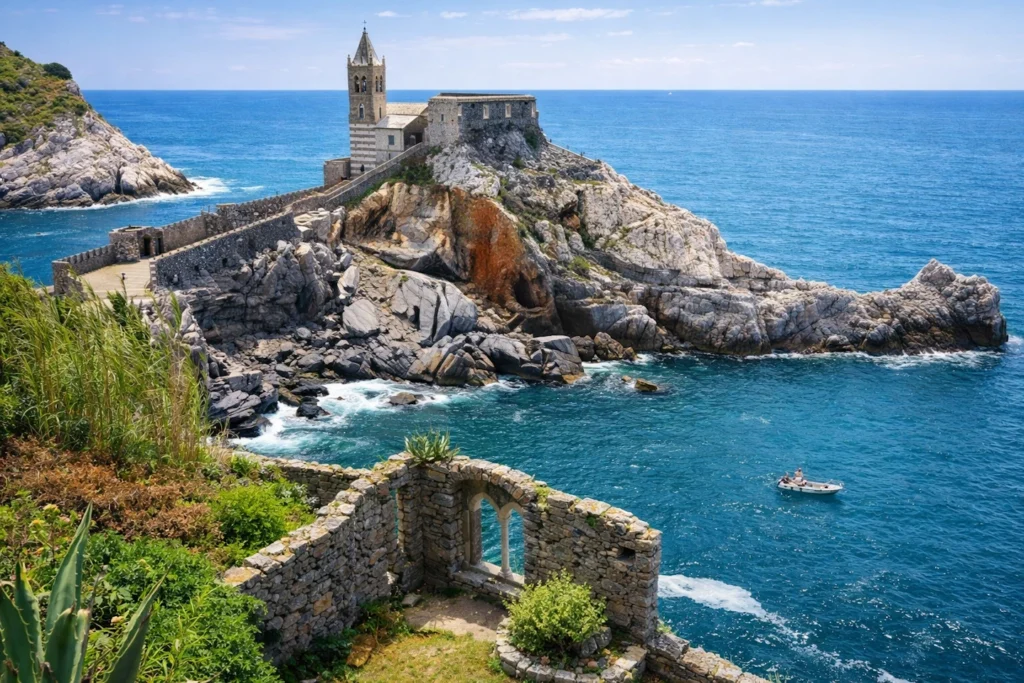
Portovenere works best as a short, focused sequence. Start from the harbour-front to absorb the vertical colour of the houses, then climb to Castello Doria for the clearest reading of the coastline from above. Finish with the walk to the rocky headland and the Church of San Pietro, where the setting becomes pure stone-and-sea and the “dramatic” character of the place feels earned rather than decorative.