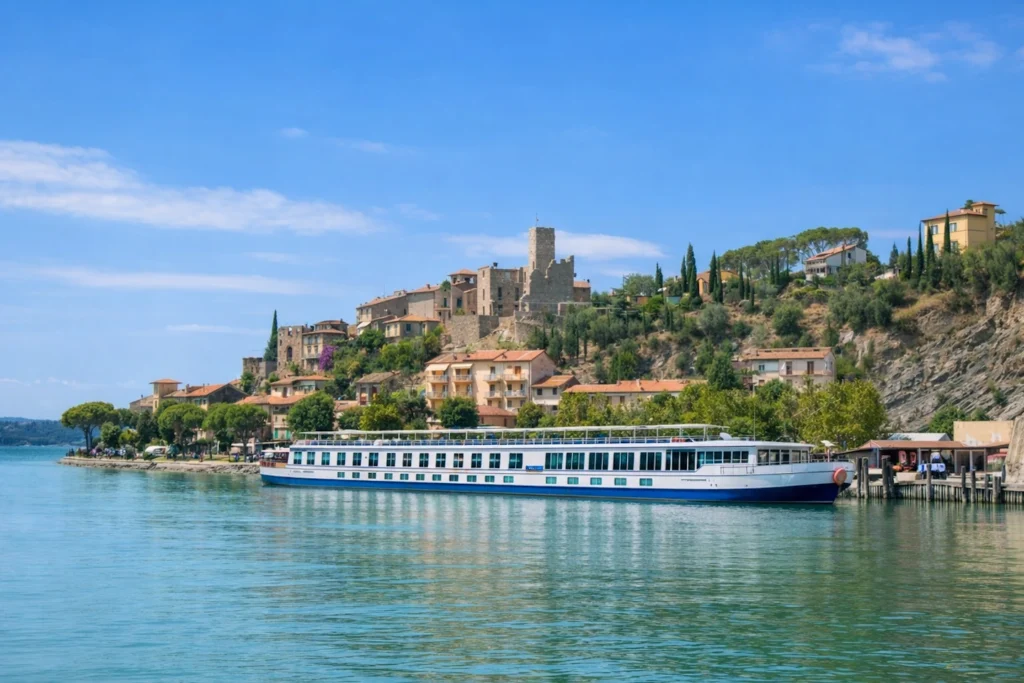
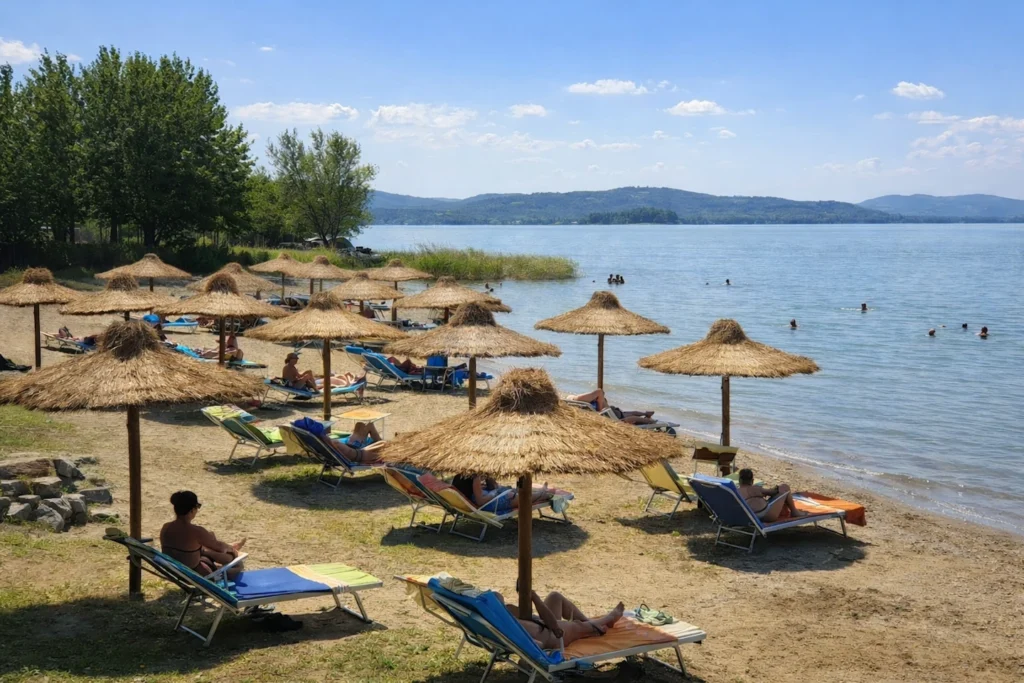
Lake Trasimeno is not Tuscany, but it is one of the smartest “expansion days” from Villa Vianci if your group wants water, wide skies, and a softer rhythm after art cities and hill drives. You are crossing into Umbria, famously branded the “Green Heart of Italy”, and Trasimeno is its “Blue Eye”: a broad, shallow lake with long shorelines, islands, reeds, and a pace that invites walking, swimming, and unhurried viewpoints rather than monument-hunting.
At a glance
- Drive time from Villa Vianci: 74 min
- Best for: scenery lovers, families, relaxed walkers, swimmers, anyone who wants nature plus culture without a heavy schedule
- Time needed: half day to full day</b
- Booking tip: eep the day flexible; if you want islands or boats, check seasonal ferry timetables close to your stay
- Highlight: a “lake day” that can include beaches, islands, wetlands, and art in landscape in one coherent loop
What to see in Lake Trasimeno
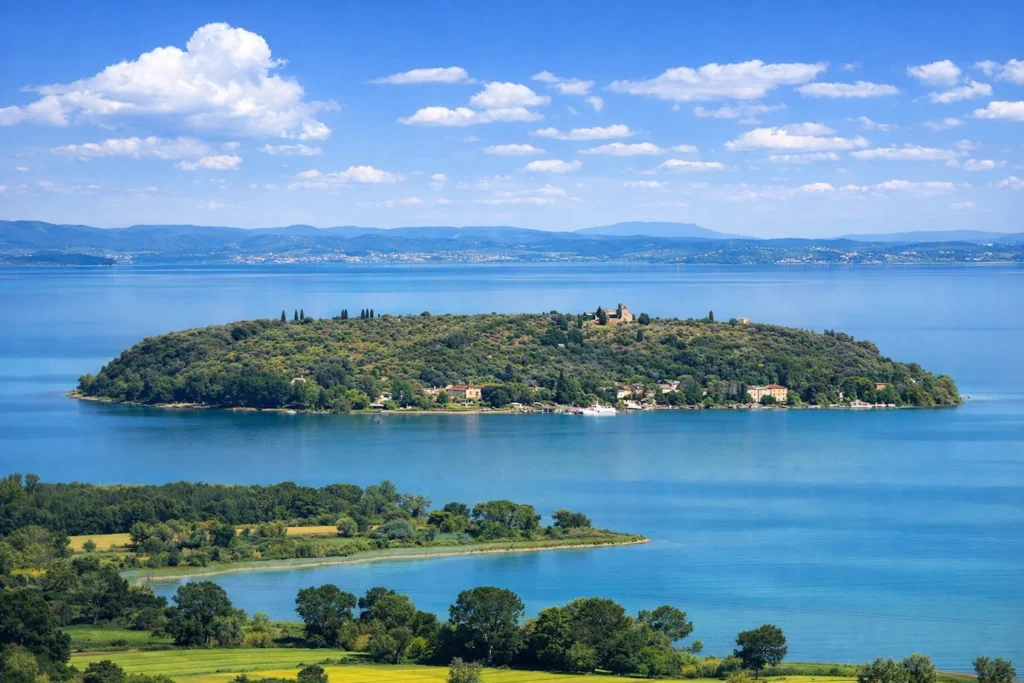
Start with the waterline, not with a town. The best Trasimeno day is built around one chosen “base” on the shore, then a few deliberate layers. Passignano sul Trasimeno is an easy starting point if you want a clean promenade feel and straightforward logistics. Castiglione del Lago works well if your group likes adding a stronger “inside the place” pause (views, stone, and a more structured historic centre), while San Feliciano and the southern shore are excellent if your priority is nature and islands.
Then decide which Trasimeno mood you want: swim, walk, or islands, and build the day as a sequence rather than a checklist. If you want the simplest summer version, choose a proper lakeside lido and treat the morning like a calm beach chapter. Trasimeno is ideal for families because the day can stay gentle: shallow shoreline areas, easy breaks, and shade stops. If you want a very practical swimming setup with services, one well-known option is the Lido di Tuoro (Punta Navaccia), which also positions you perfectly for a second, more cultural layer later.
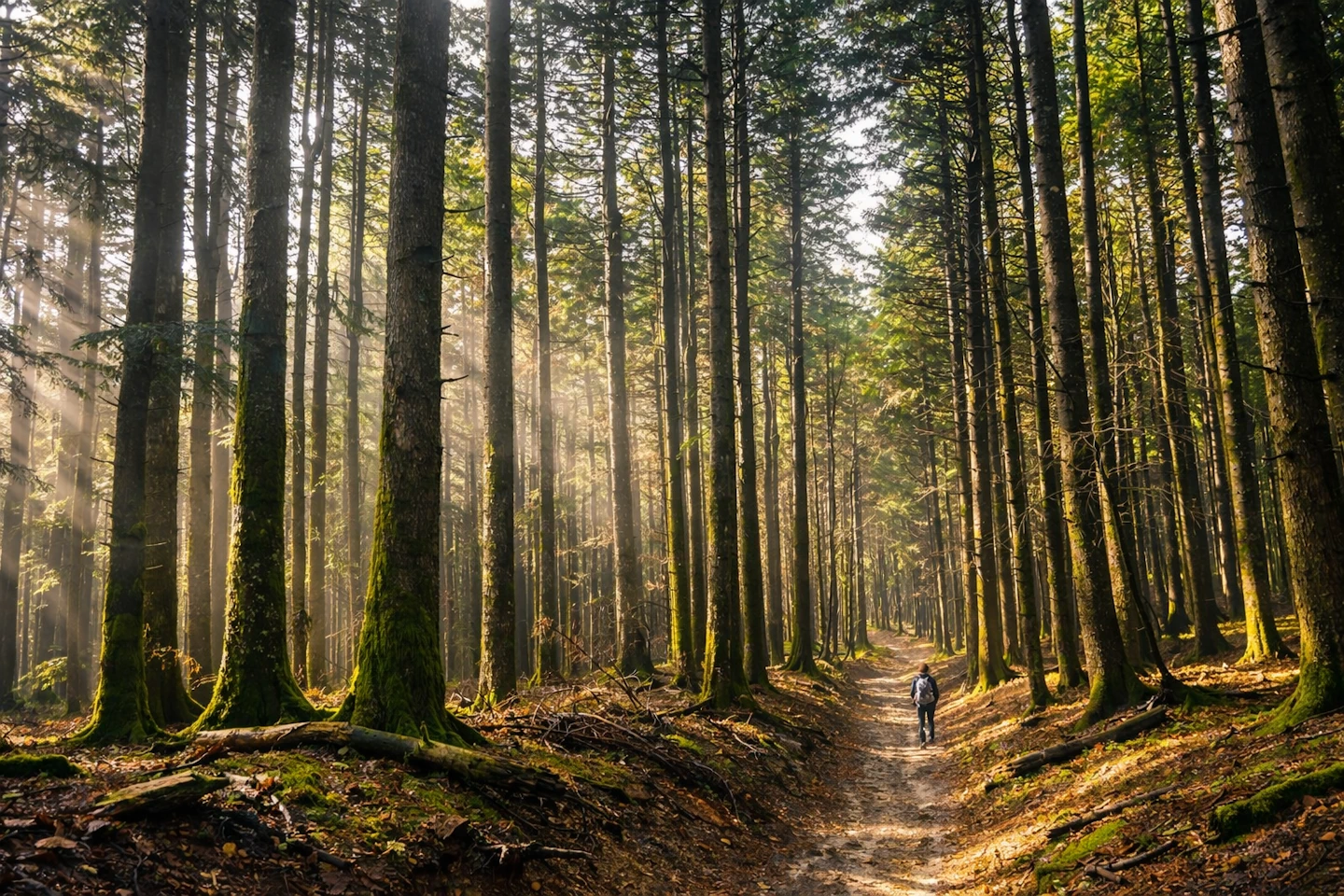
If your group wants walking that still feels “holiday-easy”, use Trasimeno’s ring geography. The lake is crossed and framed by long-distance routes, and you can “borrow” short, rewarding segments without committing to a full trek. A particularly good concept is to sample a short section connected to the Via del Trasimeno idea: you get reeds, open water, changing angles across the lake, and that pleasant sense of moving through a landscape rather than only stopping in it. The day becomes legible and calm: park once, walk 30 to 60 minutes, then return to the shore for lunch and water time.
To make the day feel truly natural, add one wetland stop. The Trasimeno area includes protected habitats that are excellent for a different kind of attention: birds, quiet observation, and the “soft” beauty of reeds and water channels. If you have even one person in the group who enjoys wildlife, a visit built around a local wetland oasis and a short lakeside walk can be surprisingly memorable, especially in spring and early autumn.
Now add the most satisfying Trasimeno upgrade: the islands. Ferries and navigation services connect key shore points to Isola Maggiore and Isola Polvese (timetables are seasonal, so treat this as a “check-close-to-your-stay” element). Isola Maggiore is the most atmospheric if you want a quiet, human-scale island walk, small lanes, and a distinctive cultural note (including the lace tradition). Isola Polvese is perfect if your group prefers a more “nature reserve” feel, with walking routes and the sense of being inside the lake rather than only looking at it. This is often the moment that turns a pleasant lake day into a genuinely Tuscan-Umbria memory: you leave the car rhythm behind and let the water do the pacing.
Finally, keep the end of the day light and scenic. Trasimeno rewards late-afternoon light: long horizons, soft colours, and an easy final stroll by the shore before you return to Villa Vianci. It is a day that works best when it stays breathable: one swim chapter, one walk chapter, one island or viewpoint chapter, then back to the countryside.
Nearby – Campo del Sole
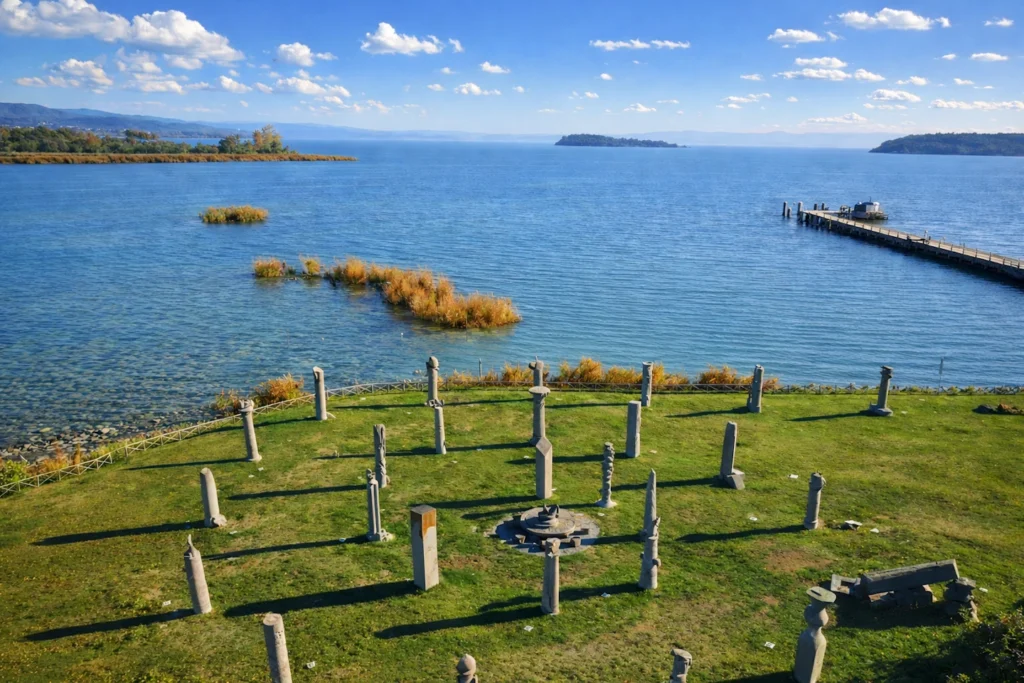
If you want one stop that feels both landscape and idea, choose Campo del Sole at Punta Navaccia. It is an open-air installation on the lakeshore: a “stone circle” of sculpted columns (each by a different artist) that reads like a contemporary, Etruscan-echoing temple rising out of water and wind. It is simple to visit, free in spirit, and surprisingly powerful at golden hour, when the lake turns the sculptures into silhouettes and the whole place becomes quiet and cinematic.
What makes it even more interesting is why it is here. The site is not chosen at random: it stands where Hannibal ambushed and shattered the Roman army. The battle is dated to 21 June 217 BC, and the defeat here was so devastating that Rome genuinely feared for its survival.
And it invites a strong “what if” thought. Rome did recover later, but in that moment it truly seemed close to breaking. What if Hannibal, instead of consolidating and moving elsewhere, had marched straight on Rome while panic was still raw, would the Republic have survived, and would the Mediterranean story have unfolded in the same way? Campo del Sole does not “explain” the battle, but it makes you feel how places keep memory, even when they look serene.