The “Marble Miracle”
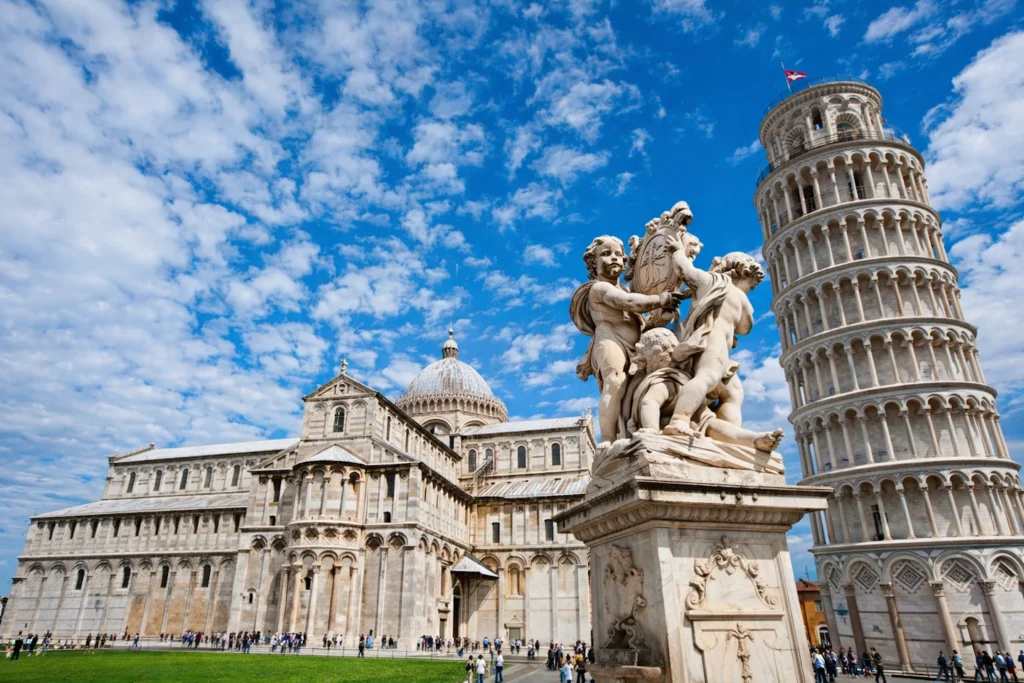
Pisa is instantly recognisable for the pale glow of its marble, for the calm geometry of the Piazza dei Miracoli, and for a monumental ensemble that feels almost unreal in its clarity. The Piazza del Duomo is a UNESCO World Heritage Site, and its power lies in the way architecture, sculpture, and sacred space are fused into one coherent statement, not a single “must see”, but a whole cultural system built in stone.
What to see in Pisa
Begin where Pisa is at its most concentrated, Piazza dei Miracoli. Treat it as a sequence rather than a snapshot. Start from the Duomo, because it sets the language for everything else. The Cathedral of Santa Maria Assunta was begun in 1063, traditionally linked to Buscheto, and it is one of the founding monuments of the Pisan Romanesque, a style that reads as both Mediterranean and fiercely local: marble bands, rhythm, and an exterior designed to be read like a façade of music.
From the cathedral, move to the Baptistery, because it changes the register from civic pride to intimacy and voice. Even if you only spend a short time inside, listen to the space. The building is a lesson in proportion, and it also holds one of the most important sculptural moments in Italy: Nicola Pisano’s pulpit, a work that helps you understand why Pisa matters so much to the story of European sculpture.
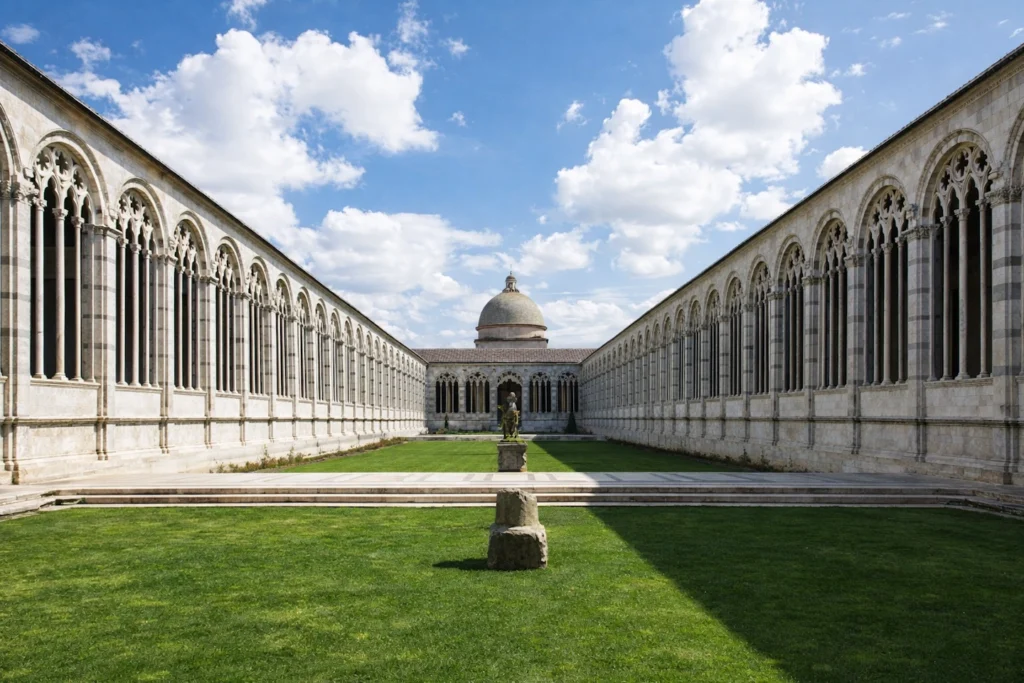
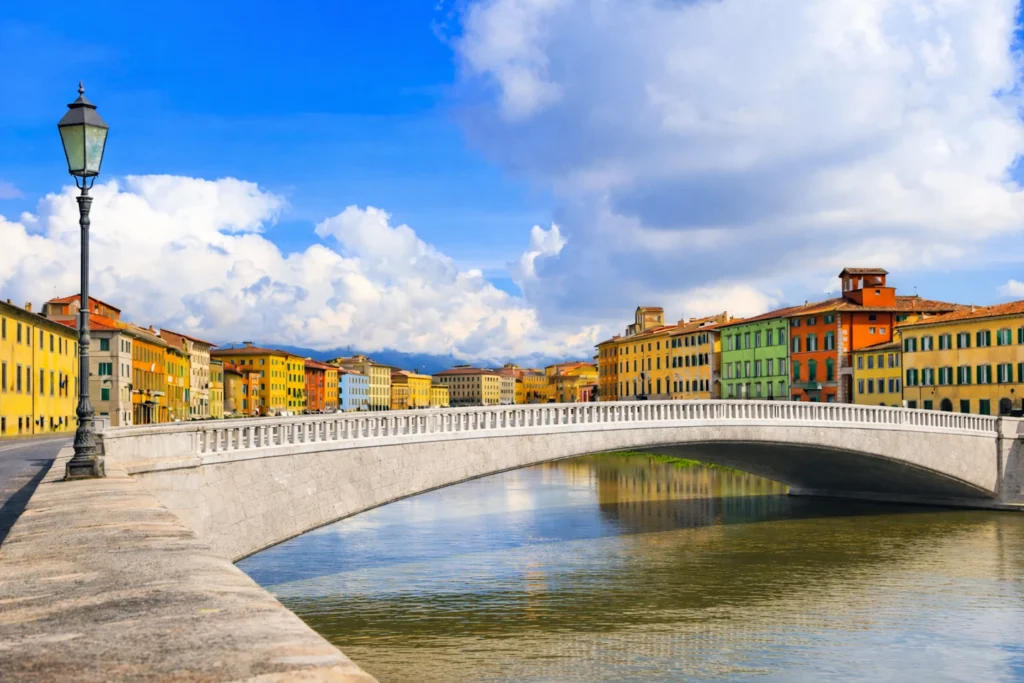
Only after that, go to the Tower. The point is not the cliché photo, it is the paradox: a bell tower intended as a clear vertical signature, made extraordinary by physics and time. Construction began in 1173, and the structure still reads as part of the same marble “sentence” as the cathedral and baptistery, not a separate attraction. If you do climb, do it for the slow reveal of the complex’s spatial logic, how the monuments sit on the grass, how the lines of sight work, how the city drops away behind the perfection of the square. To complete the Piazza, give real time to the Camposanto Monumentale and the museum spaces connected to it. The Camposanto is not simply “another building”, it is Pisa’s memory chamber, built to hold the dead and, unexpectedly, some of the most haunting painting in Tuscany. The great fresco cycles, including the famous Triumph of Death traditionally associated with Buffalmacco, turn the space into an ethical theatre, where medieval imagination becomes visible and disturbingly modern. If you care about how art is made, the sinopie and the working traces behind fresco painting are part of the story, and they make the visit feel like stepping into an atelier rather than a finished display. Then leave the Piazza and take Pisa “in the long”, along the Arno. This is where the city stops being monumental and becomes urban. Walk the Lungarni, let the light do its work, and look for the smaller, sharper notes: churches that feel like reliquaries, façades that carry the residue of a maritime republic, courtyards and galleries that appear almost by accident. If you want one museum that repays attention, choose the Museo Nazionale di San Matteo: it is the right place to read Pisa’s artistic identity beyond the Piazza, through painting, sculpture, and devotional culture across the centuries.
Nearby - Teatro del Silenzio
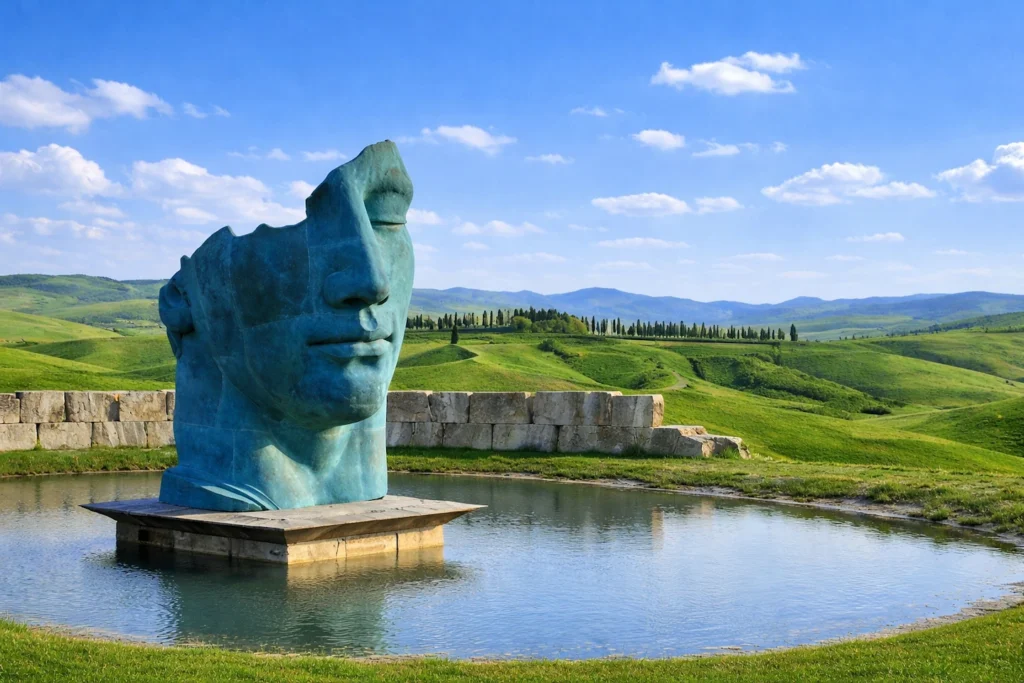
If you want a nearby excursion that stays firmly within art and culture, the Teatro del Silenzio in Lajatico is a remarkable choice, subtle, landscape-based, and unexpectedly moving. It is not a “nearby” in the strict sense, but it can work beautifully as a stop halfway between Pisa and Villa Vianci, especially if you take secondary roads and treat the drive as part of the experience. Created on the initiative of Andrea Bocelli, it was conceived as a natural amphitheatre where voice, music, and place become a single composition: for most of the year the setting remains open countryside, and the stage is installed only for selected events. It is the kind of detour that adds depth rather than quantity: less museum, more atmosphere, and a cultural memory anchored in Tuscan space.