The “Industrial Crossroads”
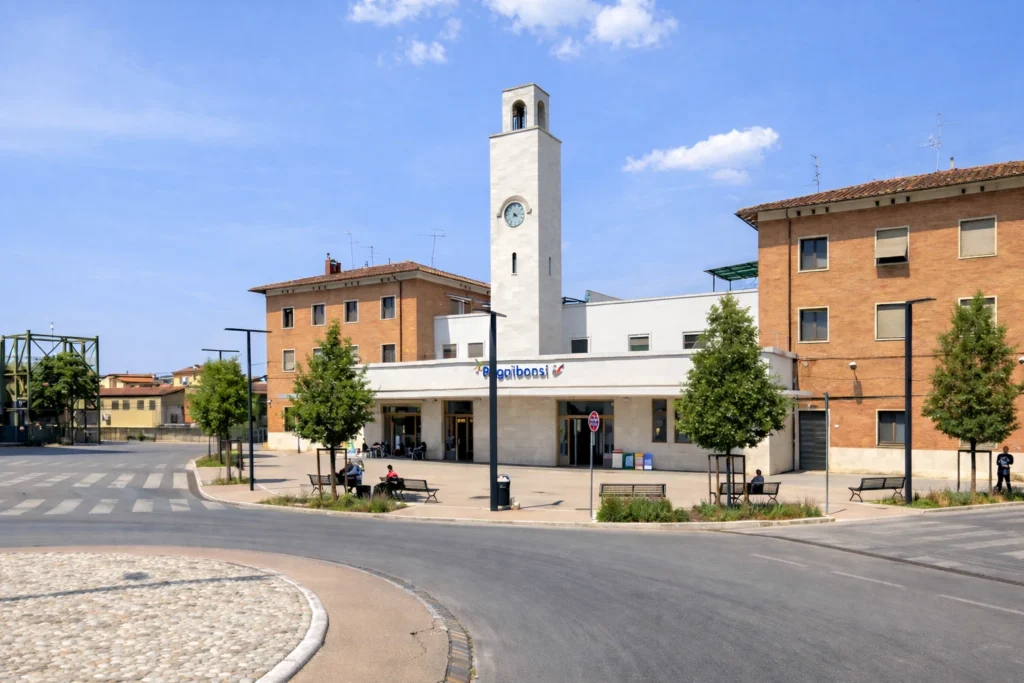
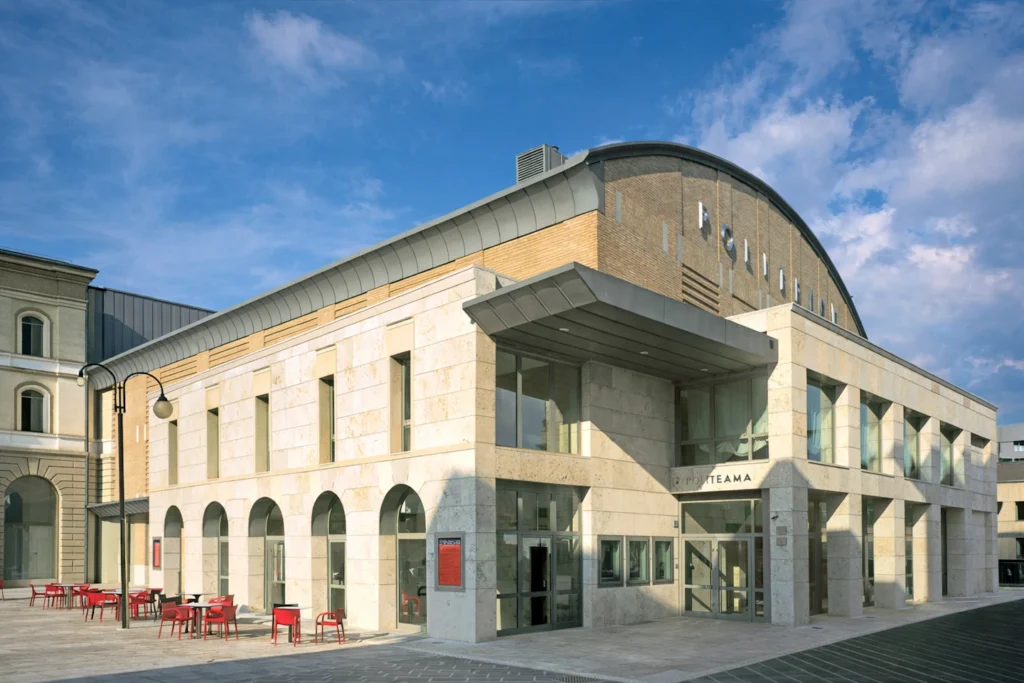
Poggibonsi is not a postcard-town, and that is precisely its value. It is the closest large town to Villa Vianci and the most practical service hub in the area, the place to go for a proper grocery run, pharmacies and essentials, larger-scale shopping, and the kind of everyday conveniences that make a stay smoother. It is also the easiest point for public transport, with a well-connected train station and regional buses. Parking near the station is generally straightforward, so guests can leave the car and move by train or bus with minimal stress.
Its modern profile reflects both history and speed. Because of its strategic position as a transport junction, Poggibonsi was heavily damaged during World War II and then rebuilt rapidly, expanding decisively in the post-war decades. That rapid growth matches its economic identity, the town became a solid manufacturing centre in Valdelsa, historically known for skilled woodworking, once tied to the making of carts and related components, and today echoed in the wider “Camper Valley” supply chain, where craftsmanship in wood and interiors meets recreational-vehicle production.
What to see in Poggibonsi
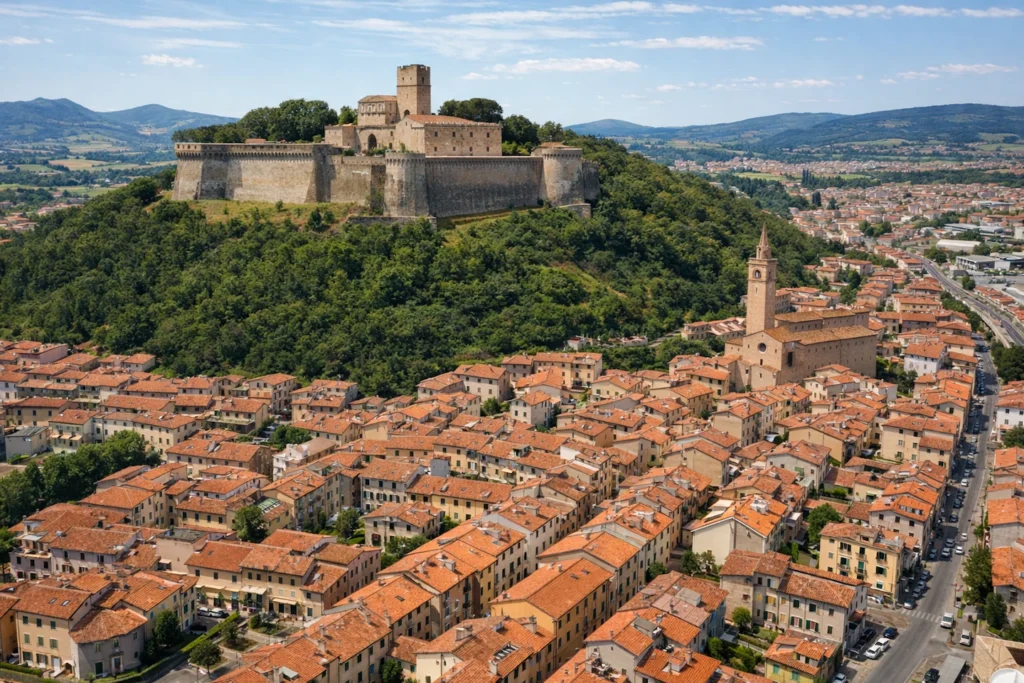
Start at Poggio Imperiale, a hill that condenses the town’s long history into one walk. Here you find the Fortezza Medicea and, above all, the Cassero, a pentagonal fortified core built in the early 1500s, conceived as a serious piece of military engineering rather than a scenic ruin. It is a crisp introduction to Renaissance fortification, geometry, bastions, corridors, and a sense of controlled space that feels almost architectural in the modern sense.
Inside the same area, the Archeodromo is the most surprising experience Poggibonsi offers. It is an open-air reconstruction, full scale, of an early medieval settlement of the Carolingian age, designed as living history, not a static display, but a place where techniques, crafts, and daily life are demonstrated with clarity and rigour. Even visitors who are not archaeology specialists usually come away with a sharper, more concrete sense of what early Middle Ages actually meant in material terms.
To add a different layer, stop at Fonte delle Fate, the town’s most evocative medieval survival, a public fountain built in the 13th century, recognisable by its elegant sequence of pointed arches and its sober, functional beauty. It is the kind of monument that does not try to impress, yet it stays in memory because it feels like a real fragment of civic life.
If you want one more quiet but substantial place within the same territory, the Basilica of San Lucchese, and the former convent, offers exactly that, a serious, atmospheric stop that connects local devotion, Franciscan memory, and a calmer rhythm than the town centre.
Nearby - Rocca di Staggia
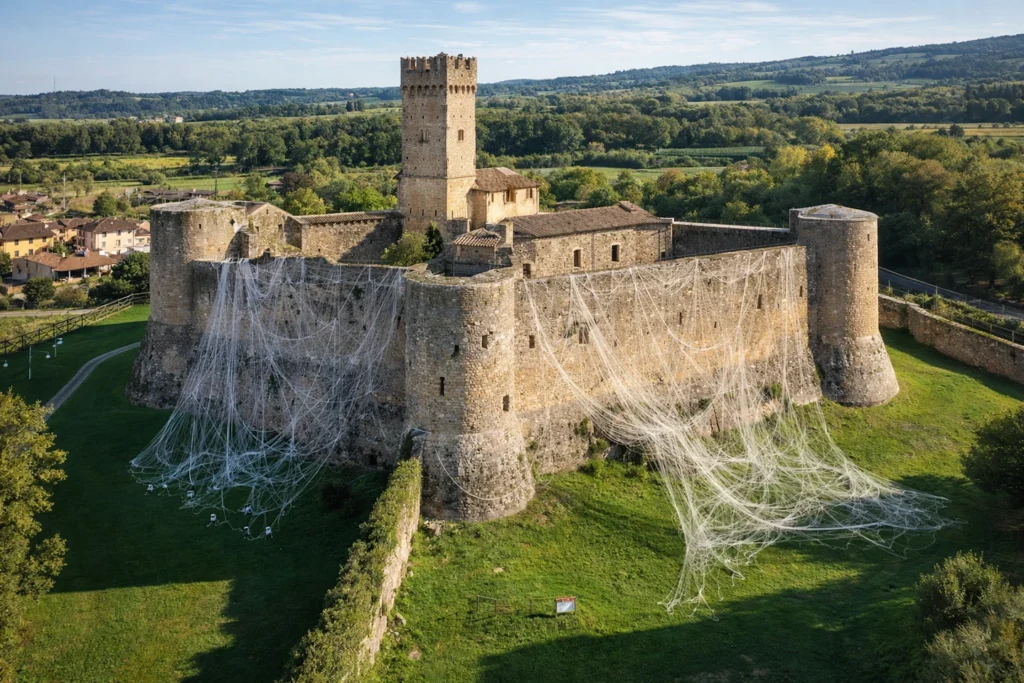
Rocca di Staggia, Staggia Senese, is close to Villa Vianci, a privately owned fortress with its own ring of walls and clearly legible building phases dating from the 13th and 14th centuries. In 1431, when the area was under Florentine control, Filippo Brunelleschi was sent to Staggia to oversee major fortification works. Today, the Rocca is accessible only by guided tour, with advance booking. If guests enjoy walking, it can also be reached on foot from the villa in about 50 minutes each way. The return walk is uphill and therefore more demanding, and the final five minutes follow a short stretch of paved road shared with cars, it’s a quiet secondary road with limited traffic, but a little extra care is recommended.