The "Medieval Manhattan"
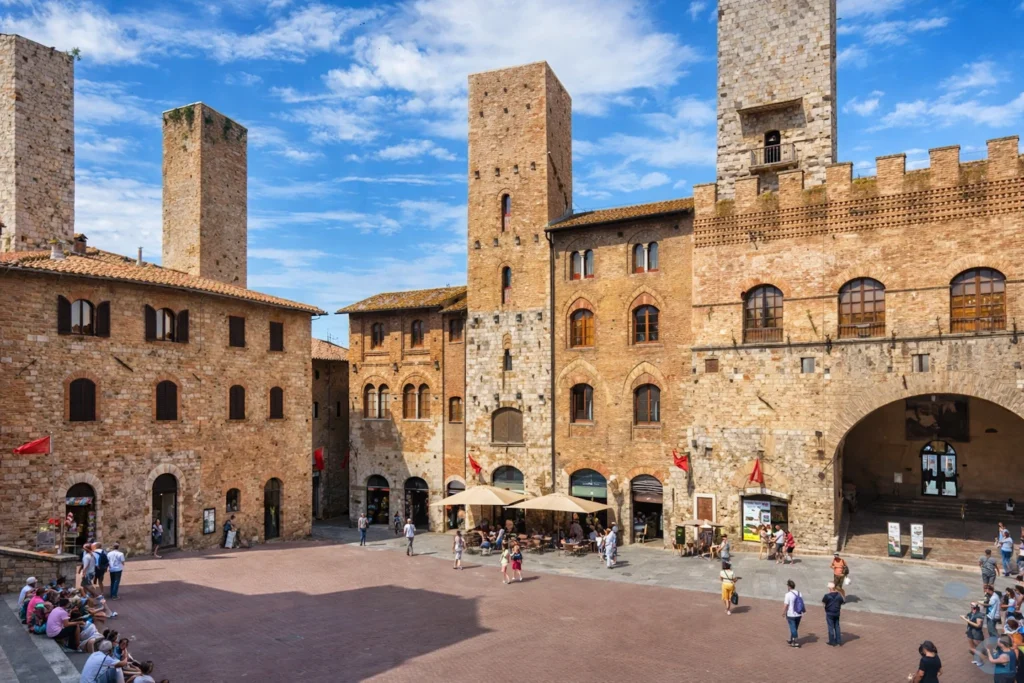
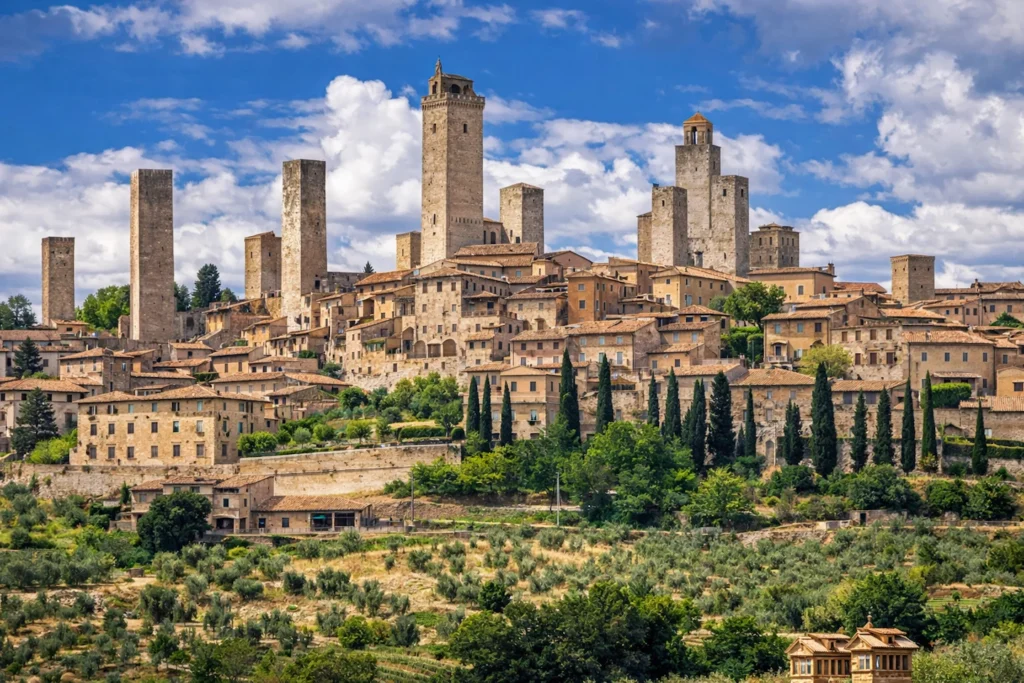
San Gimignano is instantly recognisable for its skyline of medieval towers, a profile so emblematic that it has become one of Tuscany’s visual signatures. The Historic Centre has been a UNESCO World Heritage Site since 1990, and part of its power lies in how clearly the Middle Ages are still legible in stone, an urban form shaped by wealth, rivalry, and prestige. In its peak period the town counted dozens of tower-houses, traditionally recorded as 72, while 13 survive today, still defining a silhouette found nowhere else in Italy.
What to see in San Gimignano
Begin with the town’s two connected hearts, Piazza della Cisterna and Piazza del Duomo. They are not simply pretty squares, they are the clearest way to understand San Gimignano as a civic organism, compact, vertical, and intensely competitive, where private power, the towers, and public authority, cathedral and communal government, face each other within a few minutes’ walk.
The Collegiata, Cathedral of Santa Maria Assunta is essential, not only as a monument but as an interior experience. The church is celebrated for its great narrative fresco cycles that transform the walls into a continuous visual story, with major works spanning the Trecento to the Renaissance, among them the chapel of Santa Fina painted by Domenico Ghirlandaio, alongside frescoes linked to masters such as Lippo Memmi and Bartolo di Fredi. It is one of those places where museum-value never cancels the sense of living civic devotion.
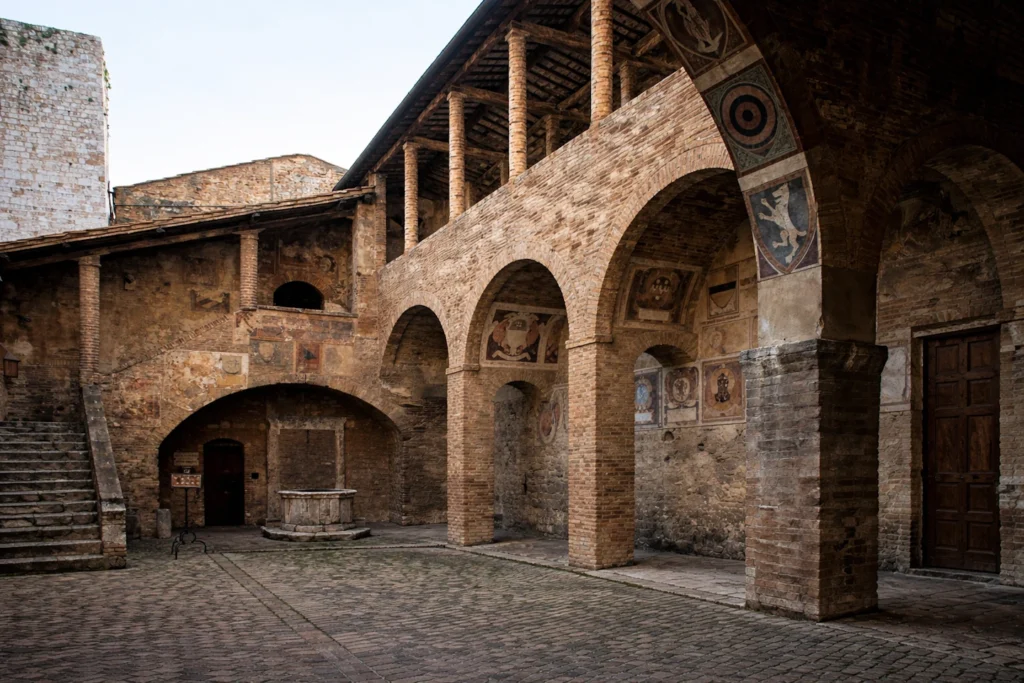
Just beside the Duomo, the Palazzo Comunale offers the town’s civic counterpart, an architecture of government that remains remarkably concrete. Inside, the civic museum route leads you into rooms where art, administration, and identity overlap, including the Sala di Dante, associated with the poet’s documented presence in San Gimignano, and it builds naturally toward the climb of Torre Grossa, the town’s highest tower, inaugurated in 1311 and rising to about 54 metres. From the top, the view finally explains the towers as a territorial language, not merely a skyline.
To complete the visit with one distinctly local layer, give space to Vernaccia. San Gimignano’s historic white wine is part of the town’s long identity, already explicitly present in sources since the Duecento, and it fits beautifully here because it does not require extra driving. Tastings and wine-focused stops can be integrated into the same walkable day, often linked to the Rocca di Montestaffoli area and the town’s broader narrative of landscape, cultivation, and civic pride.
Nearby - Monastery of Cellole
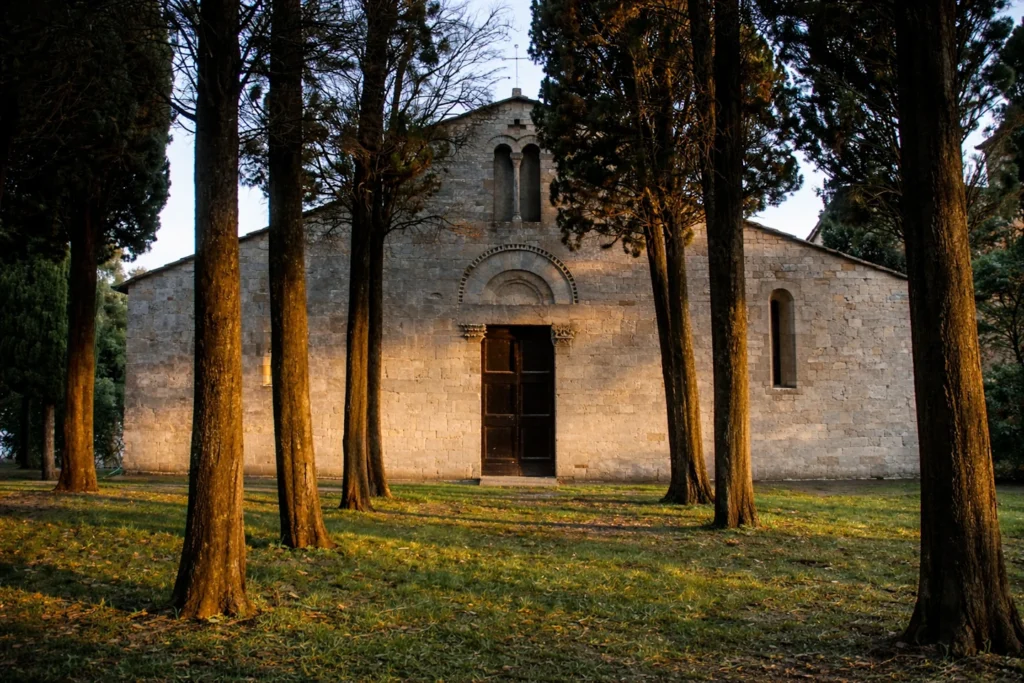
If you want a quiet, meaningful excursion without repeating the hilltown format, the Pieve of Cellole is an excellent choice, a Romanesque church set in the Valdelsa countryside, traditionally connected to an older sacred place-name, with early evidence from the 11th century and a recorded consecration in 1238. In the same period it also served as a leprosarium, a hospital for the isolation and care of leprosy, adding a sober social-history layer to its beauty. The three-nave interior and the cypress grove around the church make the visit feel like a deliberate pause, simple, architectural, and deeply Tuscan.