The “Walled City”
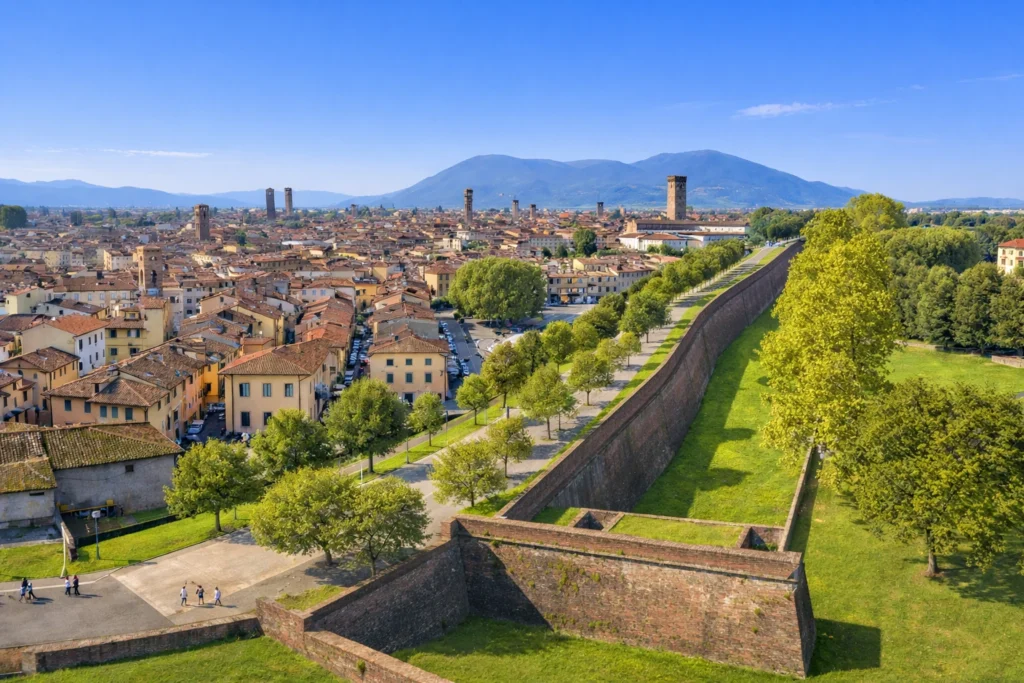
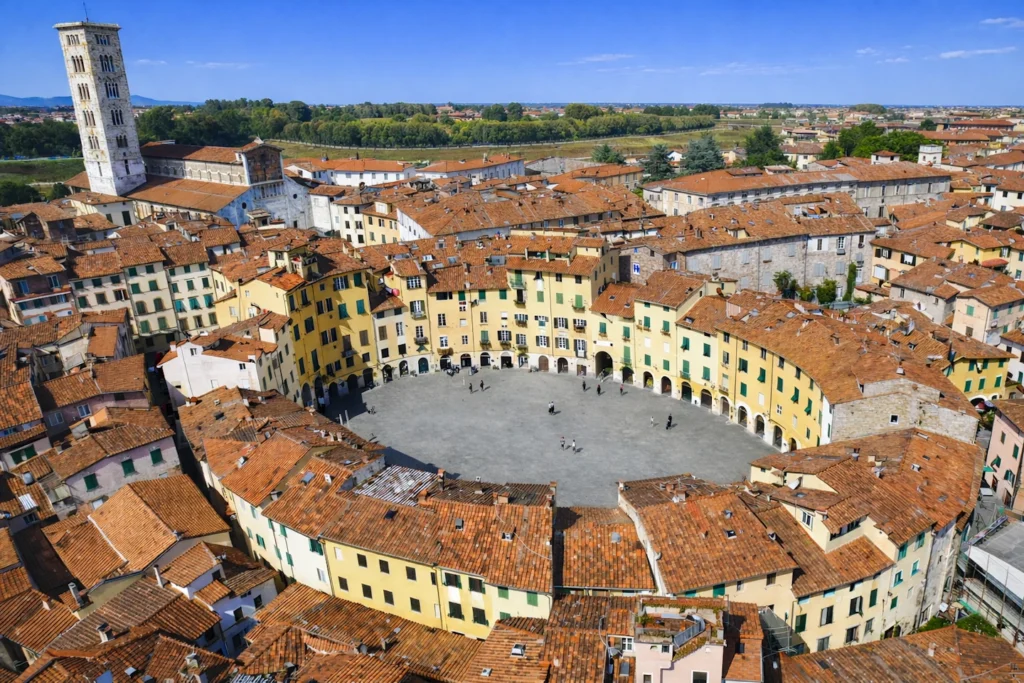
Lucca feels like a city designed for walking, reading, listening. Its great Renaissance walls still hold the Historic Centre like a calm frame, and inside them the rhythm is unusually human: Roman streets and piazzas, golden churches, elegant shopfronts, shaded lanes, and a sequence of small civic museums that reward slow attention. Lucca’s identity is cultural in a very Tuscan way, not loud, not monumental for its own sake, but layered and precise, with a Roman core, a strong medieval and Romanesque presence, and a refined patrician world that never lost the habit of beauty. It is also the city of Giacomo Puccini, and the musical thread here is not a slogan: it runs through places, theatres, and a living calendar of performances.
What to see in Lucca
Begin with the walls, because they are not just “defensive architecture”, they are Lucca’s most intelligent public space. The tree-lined promenade on top of the walls gives you a complete orientation loop, an elevated walk where the city reads clearly in roofs, bell towers, and gardens. It also sets the tone: Lucca is best enjoyed with time and light, not with a checklist. Drop into the centre at Porta San Pietro or Porta Santa Maria, and let the walls become your compass for the rest of the day.
From there, go straight to a place that explains Lucca’s Roman past without any effort: Piazza dell’Anfiteatro. The oval shape is the memory of the ancient amphitheatre made urban, a Roman footprint turned into a living square. It is beautiful, but the real pleasure is conceptual: you can feel how the city re-used history as structure. A few minutes away, balance that with Lucca’s most characteristic Romanesque statement, Basilica di San Frediano, known for its striking golden mosaic on the façade. Inside, the atmosphere is quiet and substantial, the kind of church that does not perform, it simply persists.
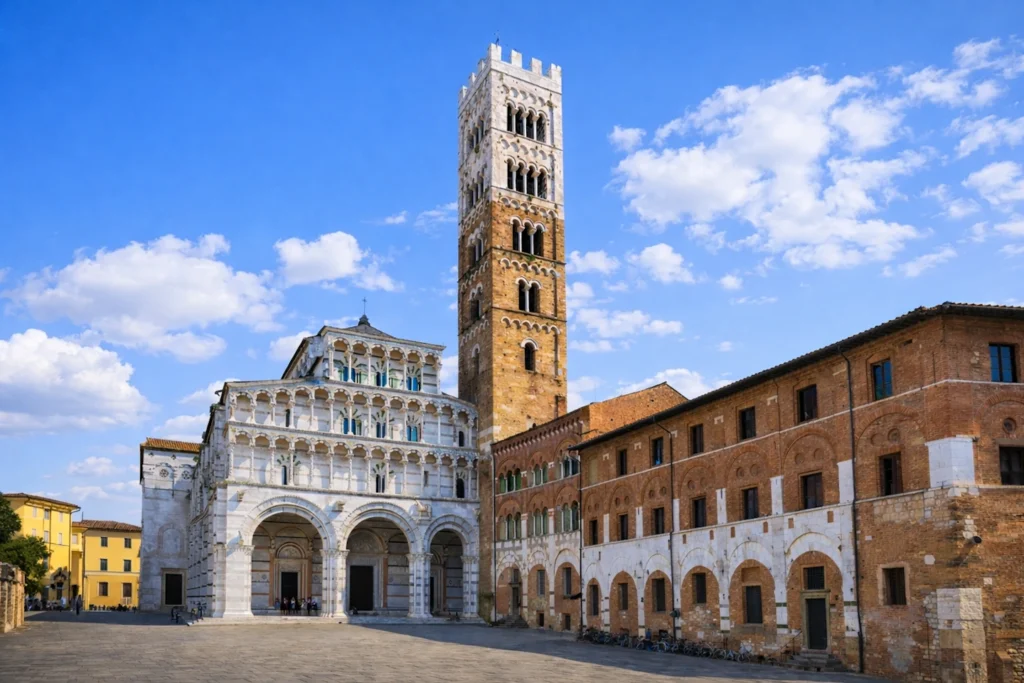
Then follow the Romanesque spine toward San Michele in Foro, set on the site of the ancient Roman forum. The façade is theatrical in stone, rich, layered, almost like a carved screen, and it gives Lucca that distinctive blend of civic pride and devotional craft. Keep the pace slow here, because Lucca’s art is often in details: capitals, reliefs, side altars, small chapels that feel intimate rather than grand.
For a deeper cultural core, move to Lucca Cathedral, San Martino. The interior carries a serious weight, and it is one of the places where Lucca feels unexpectedly major. Give space to two encounters: the Volto Santo, the city’s most powerful devotional image and a true piece of identity, and Ilaria del Carretto, Jacopo della Quercia’s funeral monument, a sculptural masterpiece that can change how visitors think about early Renaissance sculpture. If you want one church that holds both beauty and meaning without becoming a museum corridor, this is it.
After the sacred sequence, take Lucca vertically. Torre Guinigi is the most memorable climb, not only for the view, but for the small grove of trees on the top, a surprising, almost poetic gesture that turns a tower into a garden in the sky. From up there, you understand what makes Lucca different from many Tuscan art cities: it is compact, green, measured, and still lived in. If you prefer a civic interior instead of another climb, choose one palazzo museum: Museo Nazionale di Palazzo Mansi for aristocratic interiors and painting, or Villa Guinigi for a clearer historical route that frames Lucca’s art as a local tradition, not a random collection.
Lucca’s “music city” soul becomes concrete in one essential stop: Puccini Museum, Casa Natale, small, focused, and emotionally direct. Even guests who are not opera specialists usually enjoy it, because it keeps the emphasis on place, biography, and atmosphere. Pair it with a lighter cultural pleasure, the elegance of Via Fillungo, or, if your timing allows, an evening at Teatro del Giglio, where the city’s musical identity feels contemporary, not commemorative.
To finish well, give Lucca one hour of unplanned walking. Move between Piazza San Martino, the quieter lanes behind the cathedral, and the streets that lead back toward the walls. Lucca works when you let it be livable, a city where art is not staged as a single climax but distributed through daily space.
Nearby – Villa Reale di Marlia
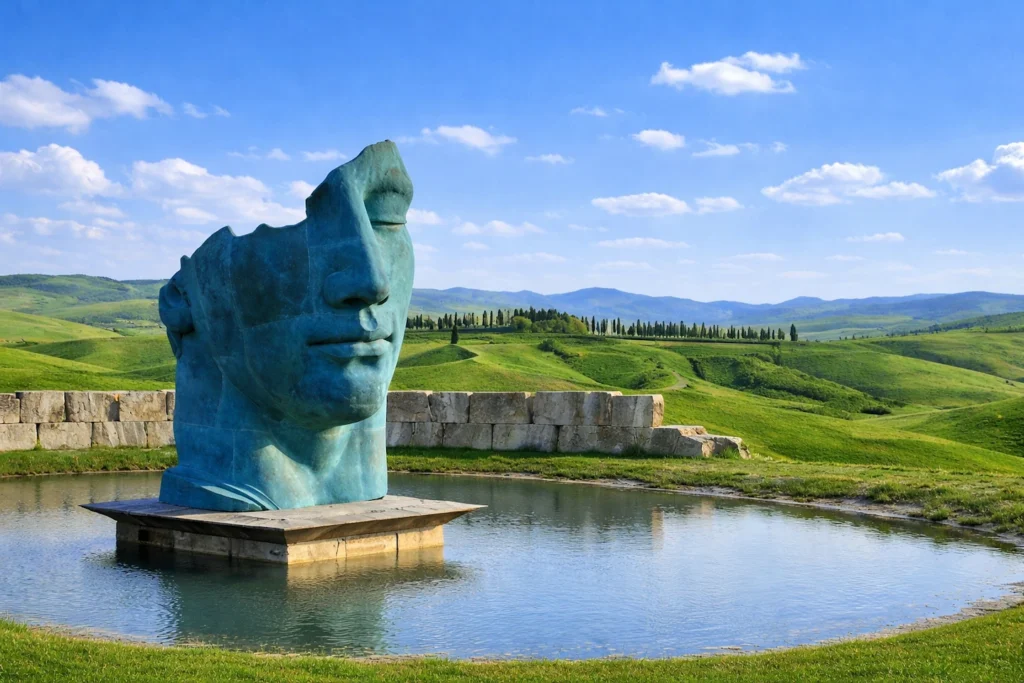
If you want a nearby excursion that stays firmly within art and culture, the Teatro del Silenzio in Lajatico is a remarkable choice, subtle, landscape-based, and unexpectedly moving. It is not a “nearby” in the strict sense, but it can work beautifully as a stop halfway between Pisa and Villa Vianci, especially if you take secondary roads and treat the drive as part of the experience. Created on the initiative of Andrea Bocelli, it was conceived as a natural amphitheatre where voice, music, and place become a single composition: for most of the year the setting remains open countryside, and the stage is installed only for selected events. It is the kind of detour that adds depth rather than quantity: less museum, more atmosphere, and a cultural memory anchored in Tuscan space.